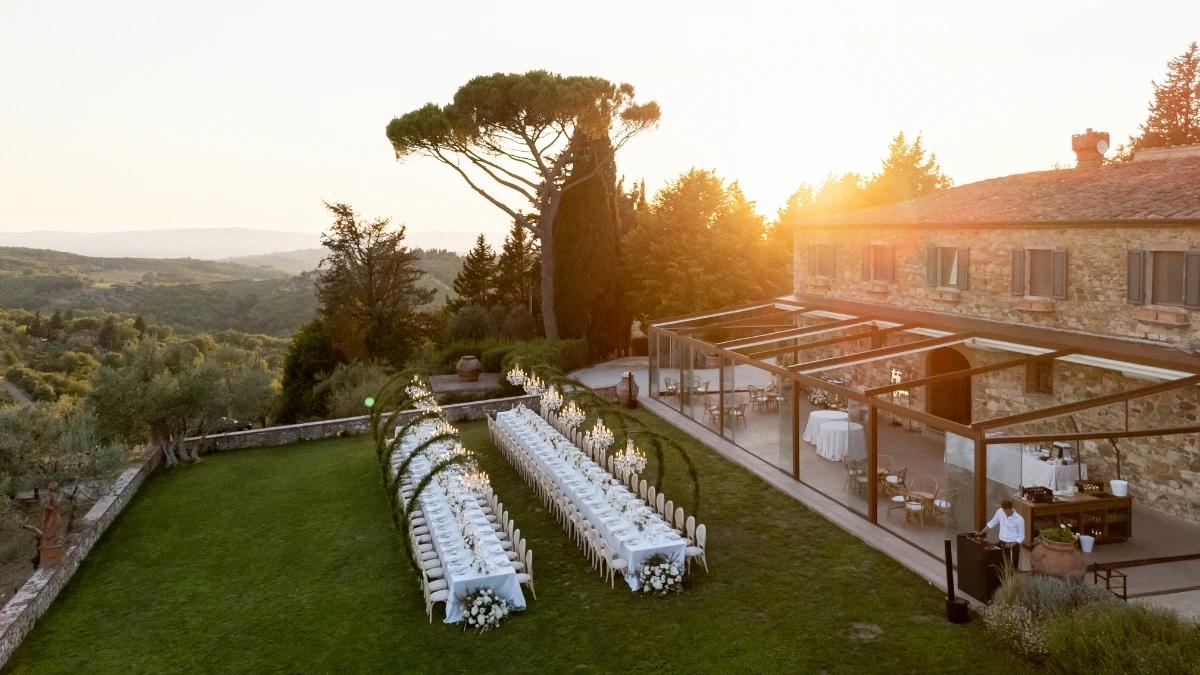
A beautiful wedding isn’t a collection of beautiful things.
And yet, this is often how wedding design begins.
A floral installation saved on Instagram. A tablescape from Pinterest. A ceremony somewhere in the South of France. A color palette from a wedding photographed in California. Individually, every image may be beautiful. Together, they may have very little to do with the same wedding — and sometimes even less with yours.
We see this more and more. Couples arrive with increasingly clear aesthetic expectations, not only for the wedding day but for the entire wedding weekend. And having references is incredibly useful. They help us understand what catches your eye and give us a starting point for conversations that can otherwise feel very abstract.
But inspiration is only the beginning.
Wedding design starts when we stop looking at those images individually and begin understanding what connects them, and what they say about the wedding you actually want to create.
Because good wedding design isn’t about recreating a beautiful wedding you’ve already seen.
It’s about taking everything that inspires you and turning it into something that could only belong to yours.
Your Inspiration Board Is Only the Beginning
Pinterest and Instagram have completely changed the way couples approach wedding design. By the time planning begins, you may already have hundreds of images showing flowers, tables, ceremonies, lighting and details you love.
Keep collecting them. They’re useful.
Just don’t expect every image to become part of the final design.
One of the first things we do is look beyond the individual references and search for the idea connecting them. Sometimes that’s immediately clear. Other times, a couple tells us they imagine an elegant, refined celebration while their saved images actually suggest something much more relaxed and rustic. Or we find a colorful ceremony beside dark, monochromatic tablescapes that belong to an entirely different visual language.
There are practical contradictions too. The flowers in an autumn reference may only be available in spring. A seemingly “minimal” installation may actually require a significant production budget. And heavily edited photography can create flower colors that simply don’t exist in nature.
That’s why we don’t use inspiration boards as shopping lists.
We combine them with conversations and a questionnaire that explores much more than wedding aesthetics, including your professions, hobbies, passions and the atmosphere you want your guests to experience. Then we start asking questions.
Not simply “Do you like this?”, but “What do you like about it?”
Our role isn’t to tell you that an idea is wrong. Almost anything can be interpreted. Instead, we look at how that initial idea could become more appropriate for your season, your setting, your budget and, most importantly, more recognizably yours.
Good Design Is Also About Space and Guest Experience.
Wedding design isn’t only about what your guests see. It can influence where they go, how they interact and even how the energy of the celebration develops throughout the day.
That’s why, when we discuss layouts with our couples, we don’t simply show them what will look best. We help them imagine what each option will actually feel like.
Where will guests naturally gather? How easily will they move from one part of the celebration to the next? Will that beautiful lounge area actually be used? Is the dance floor large enough, but not so large that it feels empty? And where is the bar?
That last question may sound surprisingly important. It is. Put the bar too far from the dance floor and you’ll constantly draw guests away from the party instead of towards it.
Scale matters too. A single sofa may look beautiful in a photograph but disappear completely in a 200-square-meter room. Rather than filling an enormous space with rentals, sometimes the smarter solution is to use lighting to visually reduce it and concentrate the design where guests will actually be.
The same principle applies to empty space. Good design is a balance of what you fill and what you leave untouched, giving important elements room to stand out.
All of these decisions also affect transitions, timing and budget. A layout that looks beautiful on paper can create slow guest movements, require more rentals or even result in people dining outside when the temperature would make an indoor dinner far more enjoyable.
And we rarely think about each space in isolation. Ideally, guests discover the wedding progressively, moving through different settings as the celebration builds towards the party, while the visual language remains consistent.
Because a well-designed wedding doesn’t just look good when guests enter a space. It helps shape what happens once they’re inside it.
Your Venue Is Already Part of the Design
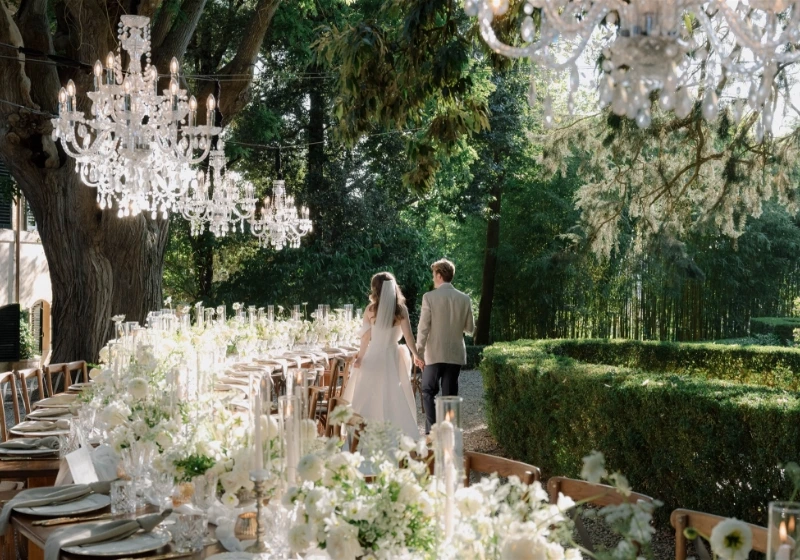
A wedding venue may be an empty box you need to fill, but it is never a blank canvas.
It already has colors, architecture, gardens, views and permanent elements you may not be able to change. Good wedding design takes all of this into account, deciding what to enhance, what to leave untouched and where an intentional contrast could add something interesting.
This is also why we don’t recommend developing a highly detailed design concept before choosing your venue.
You should know the general atmosphere you want to create. If you’re imagining a formal, elegant celebration, for example, a rustic farmhouse is unlikely to be the right starting point. But defining every aesthetic detail too early can prevent you from considering venues that meet more important requirements: from guest count and accommodation to the overall experience and could still work beautifully with your vision.
Once the venue is chosen, the design becomes much more specific.
We consider its existing colors, architecture, gardens and vegetation, permanent installations, views and lighting conditions. Sometimes the best decision is simply to let what’s already beautiful do the work. Other spaces may need more intervention, perhaps transforming an indoor Plan B so it still feels connected to the original design, or creating a more club-like atmosphere for the party.
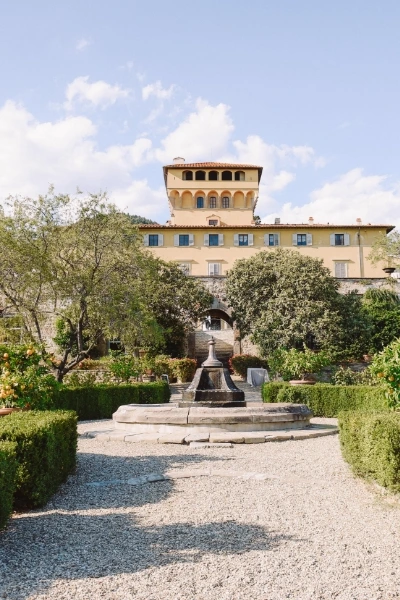
Contrast can work beautifully too. A historic Tuscan villa doesn’t automatically require a traditional wedding design. Contemporary elements may make its architecture even more striking, as long as the contrast feels intentional rather than accidental.
Good design doesn’t compete with the venue. It understands what’s already there and decides what to enhance, what to reinterpret and what simply doesn’t need anything else.
Every Design Element Needs to Speak the Same Language
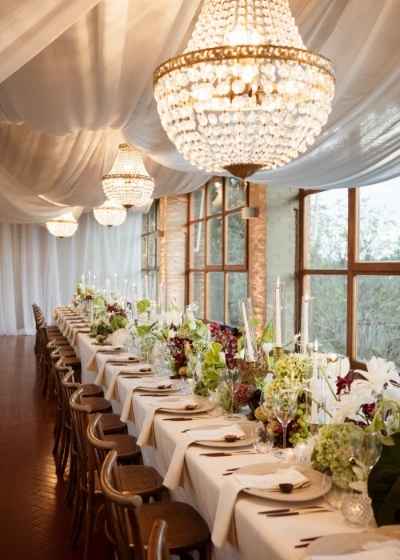 |  |
Flowers may be one of the most visible parts of a wedding design, but even the most beautiful centerpiece doesn’t create a beautiful table on its own.
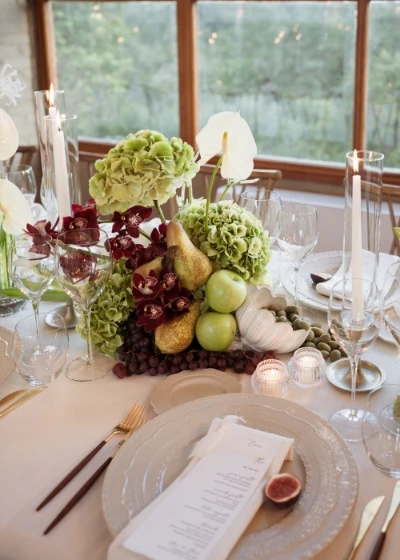
Everything your guests see contributes to the final composition: the shape and layout of the tables, chairs, linens, plates, glassware, candles and stationery. Even elements that may feel secondary become part of the design once they’re placed together.
That’s why we usually begin with a broader visual language rather than individual objects. A color palette, moodboard and choice of materials and textures help us define that language first. Linen might create the soft, matte effect we’re looking for; satin could take the same palette in a more vintage, old-world direction. From there, the concept can be interpreted across the different spaces and moments of the wedding.
Coherence doesn’t mean making everything match.
A ceremony and dinner can use color differently, for example, as long as the transition feels intentional. Across a multi-day wedding, we can go much further: changing atmosphere, rhythm and design between events can actually make the overall experience richer.
The same thinking applies to details. Tableware shouldn’t become an afterthought simply because the flowers are beautiful. And sometimes a very simple tablescape can become distinctive through an unexpected menu design, material or piece of stationery.
Flowers, of course, deserve careful consideration, we’ve covered their seasonality, costs and selection in our dedicated wedding flowers guide, but they’re still one part of a larger composition.
Good design happens when no element needs to be the star because everything contributes to the whole.
Why Lighting Can Completely Transform Your Wedding
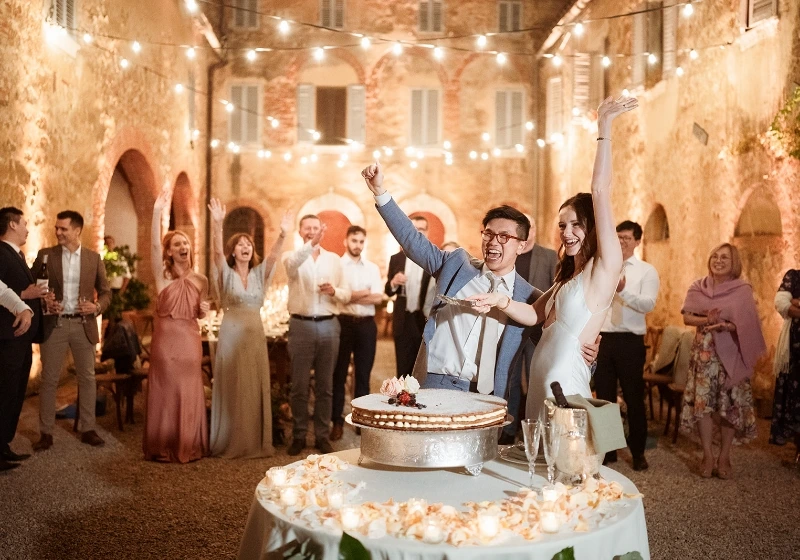
Lighting rarely creates the same immediate wow as a spectacular floral installation. In many ways, its effect is more subtle but it can be just as important, if not more.
We start considering lighting as soon as we work on spaces, layouts and décor because it’s part of the overall design, not something to add at the end simply so guests can see.
And that’s an important distinction. A venue may already have perfectly adequate functional lighting, while having none of the atmospheric lighting your wedding needs.
This becomes particularly noticeable at outdoor weddings in Tuscany. A dinner may begin in beautiful natural light, but the countryside becomes very dark once the sun goes down. As daylight gradually disappears, artificial light takes over almost imperceptibly. Your guests’ eyes adapt to it, which is perhaps why lighting doesn’t always receive the attention it deserves.
Candles can bring warmth to a table, but they’re rarely enough on their own. String lights can look magical after dark, yet when sunset is late, their cables may remain much more visible than the lights themselves for part of the evening.
We therefore tend to think in layers: candles and decorative lighting combined with architectural uplighting that can emphasize façades, trees or vegetation and create a setting around the celebration itself.
Lighting can also visually contain a large space, direct attention towards certain areas and completely change the atmosphere when dinner transitions into the party. Even its color matters: light reflected onto flowers, linens and surroundings can change how their colors are perceived.
Lighting isn’t something you add to your wedding design so guests can see it. It determines how they will see it.
Where Should You Actually Invest Your Design Budget?
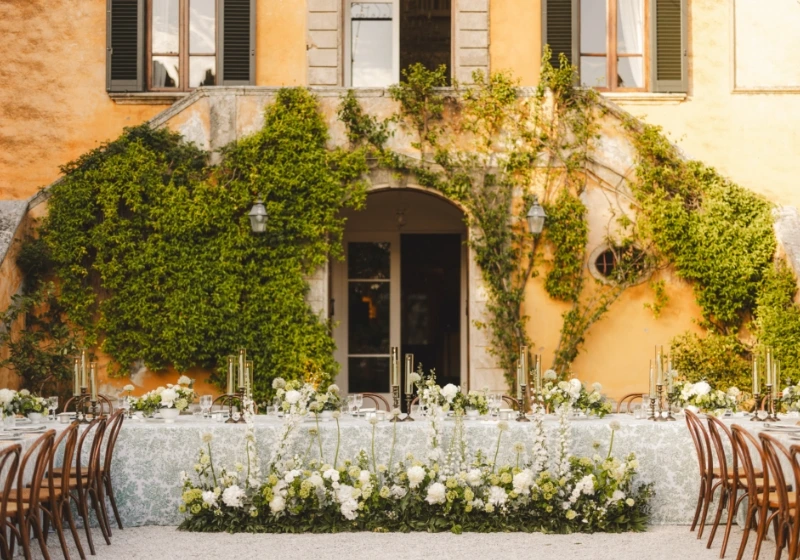
There isn’t one element of wedding design that’s always worth investing in more than another. It depends on your venue, your priorities and the overall concept.
What does make a difference is deciding where your budget will have the greatest impact.
When the original design and the available wedding budget don’t align, our first approach is usually to concentrate rather than dilute. We’d rather prioritize the ceremony, the dinner tables or another important focal point than add small decorative elements everywhere that guests may barely notice.
Time matters too. Guests spend several hours at dinner, so investing in the space they’ll experience for much of the evening can often make more sense than decorating every transition or corner of the venue.
We also look for opportunities to make the same investment work harder. Some ceremony arrangements, for example, can be designed from the beginning to reappear later around the cake table. Lighting can enhance existing architecture or vegetation while reducing the amount of additional décor a space needs.
And don’t assume that minimal automatically means inexpensive. A few carefully selected orchids, for example, can cost more than a much fuller arrangement made with less expensive flowers.
When something needs to be reduced, the goal isn’t to create a cheaper-looking version of the original design. We remove what contributes least, reconsider quantities and spacing, and protect the elements that define the concept.
A considered design budget isn’t about spending a little everywhere. It’s about making every investment visible and intentional.
What Makes a Wedding Feel Truly Yours?
A personal wedding doesn’t necessarily need your initials printed on every menu, custom-made objects at every turn or literal references to every hobby you share.
Personalization can be much less obvious and much more meaningful.
It can be found in the atmosphere you create, the way your guests move through the celebration, the music you choose, a ritual that means something to you, the pace of the dinner or the completely different mood of the party that follows.
The same applies to design.
Your flowers don’t need to be something no one has ever used before. Your tables don’t need to reinvent wedding styling. What makes the result unique is the combination of choices and the way they’re interpreted for you, in your venue, during your wedding.
That’s ultimately why inspiration images are only a starting point.
You may begin with hundreds of saved photographs showing weddings created for other couples, in other places, at other times. Through the design process, some ideas disappear, others evolve and unexpected ones take their place.
Eventually, the objective is no longer to recreate any of those images.
It’s to create a wedding that feels so naturally yours that you couldn’t imagine those choices belonging to anyone else.