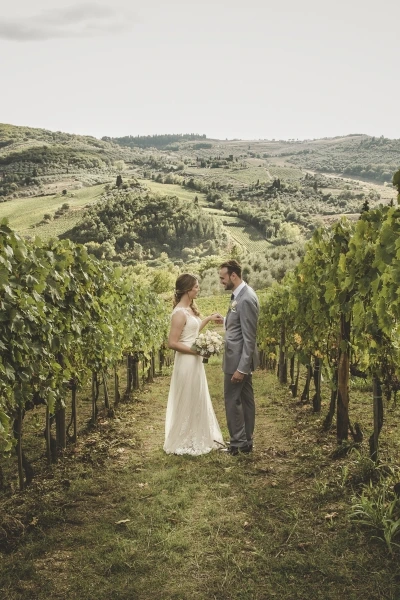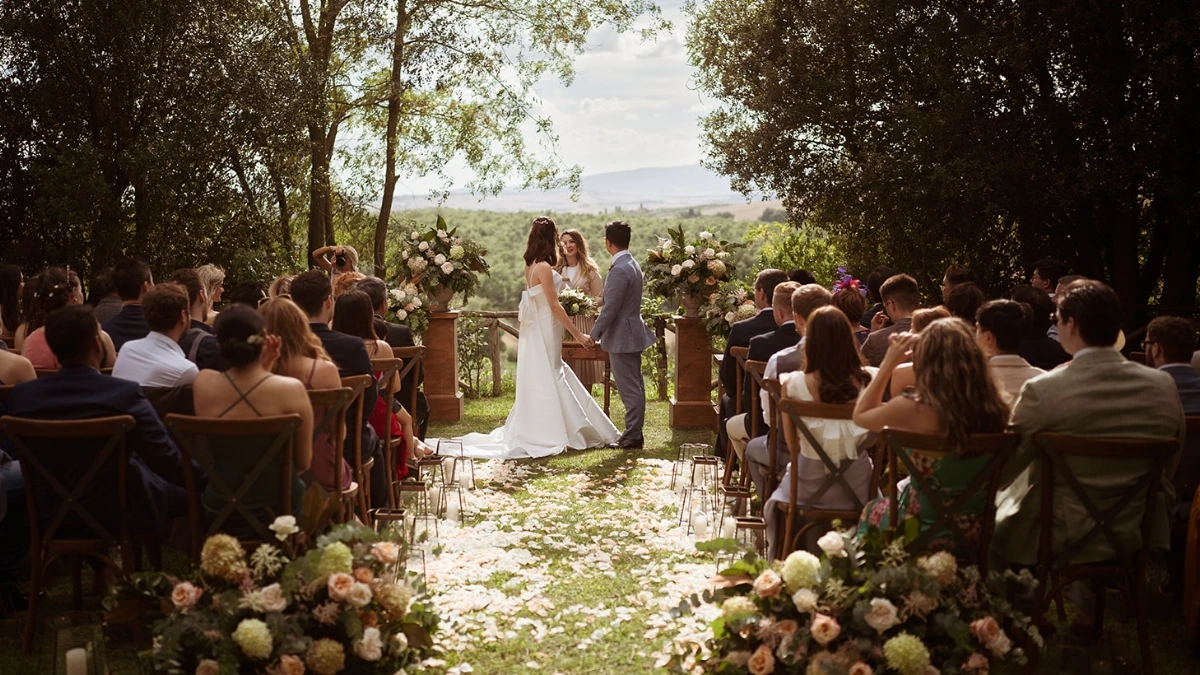
Symbolic wedding ceremonies are, without question, the most flexible and fully customizable ceremony option you can choose between multiple ceremony types. They can take place anywhere, be officiated by anyone, and last exactly as long as you want, from a beautifully concise exchange of vows to a deeply meaningful celebration rich in readings, rituals, and music.
And this is precisely their appeal. Couples love symbolic ceremonies for their freedom and ease, especially today, when weddings are less about following rules and more about telling a story: your story. It’s no surprise that the symbolic ceremony has become the favorite choice for couples seeking something personal, authentic, and emotionally meaningful.
That said, with total freedom often comes a tiny bit of panic. Too many options can make couples worry about “getting it right.” If that sounds familiar, don’t worry, below you’ll find a clear guide to all the ways you can shape and personalize your symbolic wedding ceremony in Tuscany, without losing your mind in the process.
Symbolic Wedding Celebrants in Italy
Because the ceremony is symbolic and has no legal validity, there’s no need for a celebrant with official credentials. You can ask a symbolic wedding celebrant based in Tuscany, but you can also choose a friend or family member to officiate.
The key is selecting someone who feels comfortable speaking in front of an audience and who has a genuine connection to your love story. It could be the friend who introduced you, the one who witnessed your relationship from day one, or someone who’s been married for years and can share a bit of wisdom about making love last. In symbolic ceremonies, authenticity almost always matters more than formality.
Structure & Order of Service
Even though symbolic ceremonies come with no fixed rules (yes, really), they usually follow a structure that feels very similar to a traditional wedding ceremony. This helps create a sense of rhythm and meaning for both the couple and their guests.
In most cases, the ceremony still includes the classic elements people expect: the entrance of the wedding party, the processional of the couple, the exchange of vows and rings, and a joyful recessional at the end. Guests often celebrate the couple’s exit with petals, confetti, or bubbles, just like in a traditional wedding ceremony.
Having this familiar framework makes the moment feel natural and emotionally powerful, even though the ceremony itself has no legal validity.
That said, symbolic ceremonies still allow a great deal of freedom. While there are no fixed rules, having a loose structure often helps couples feel more grounded and confident.
Here’s a standard wedding ceremony order that many couples use as a starting point. Feel free to adapt, shorten, or reinvent it entirely:
Order of Ceremony
Think of it as a framework, not a script.
- Prelude & Processional
- Welcome to Family & Friends
- First Reading
- Speech by the Celebrant
- Ritual
- The Vows
- The Giving of Ring
- Second Reading
- The Proclamation
- Greetings
- Recessional
Ceremony Music for a Symbolic Wedding
Music plays an important role in shaping the emotional atmosphere of a ceremony. Even in a symbolic wedding, a few carefully chosen pieces can guide the rhythm of the celebration and highlight its most meaningful moments.
Music usually begins even before the ceremony starts, as guests arrive and take their seats. This prelude moment may last several minutes, so having a few background pieces helps create a welcoming atmosphere and signals that the ceremony is about to begin.
The processional, when the couple and the wedding party walk down the aisle, is often one of the most emotional moments of the ceremony. Depending on how many people take part, whether only the bride enters, or also the groom, bridesmaids, and groomsmen, you can choose a single song or different pieces for each entrance.
If you plan to include a ritual, music can accompany that moment as well with a soft instrumental piece played in the background.
For the vows and the exchange of rings, we usually recommend a gentle, slow piece that acts more as a subtle musical backdrop, allowing your words to remain at the center of attention.
Finally, the recessional marks the joyful conclusion of the ceremony. Many couples choose a more upbeat song for this moment, creating a lively and celebratory atmosphere as they walk back down the aisle and the celebration officially begins.
Readings
Readings can add depth and rhythm to your ceremony, or be skipped entirely if you’re dreaming of something sweet and concise.
If you choose to include them, the options are endless: religious passages, spiritual texts, poetry, or even excerpts from literature that resonate with you. The beauty of readings lies in their flexibility: the same words can carry very different meanings depending on the tone and atmosphere you want to create.
Rituals
Many traditional wedding ceremonies follow a fixed sequence that’s been repeated for centuries. Symbolic ceremonies, on the other hand, allow you to introduce rituals that reflect why everyone is gathered there in the first place: unity.
Whether rooted in culture, spirituality, or pure creativity, rituals add emotional dept and shared meaning to your ceremony. Below are eight popular symbolic rituals. Choose one, combine a few, or use them as inspiration to create something entirely your own.
Handfasting Ceremony
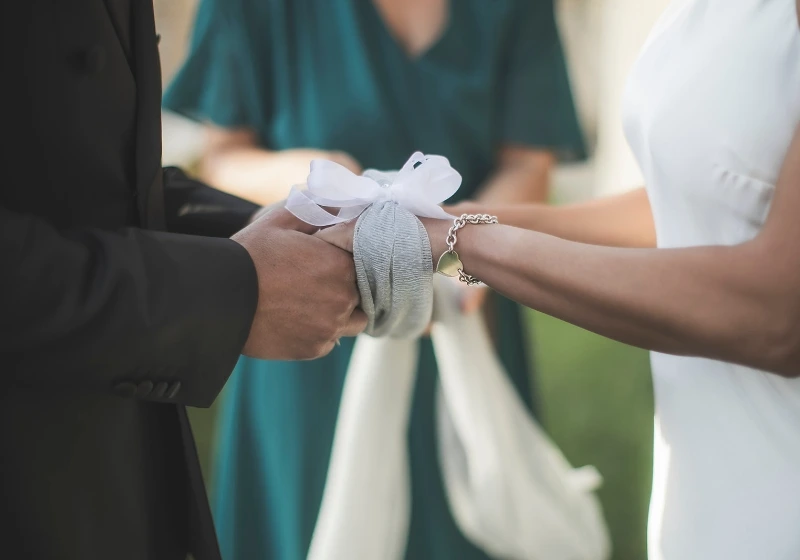
During a handfasting ceremony, the couple stands facing one another while their hands are gently tied together, symbolizing unity and mutual commitment.
Origin
This Celtic pagan ritual dates back over 2,000 years. Historically, it symbolized an engagement bond lasting one year and one day, after which couples could choose whether to marry. Today, it’s widely used in Ireland, Scotland, and increasingly in symbolic, spiritual, and Christian ceremonies.
How it’s performed
The couple joins hands while a cord or ribbon is tied with three knots, each representing a promise or wish. These can be spoken by one person or up to three different people (friends, family members, children, or the celebrant).
Any ribbon or fabric can be used, often chosen for its color, texture, or symbolism. Couples with children sometimes choose one cord per child, adding another layer of meaning.
Suggested for
- Humanistic & spiritual ceremonies
- Interfaith & multicultural ceremonies
- Couples with or without children
- Renewal of vows
Ring Warming
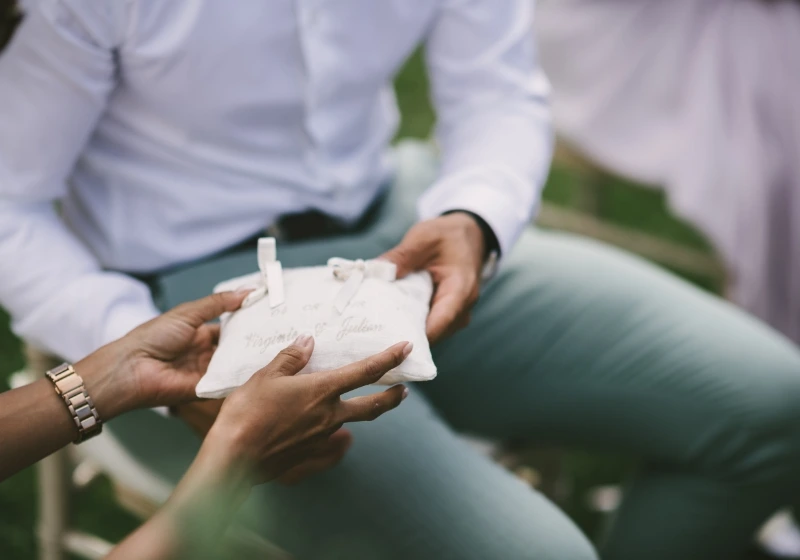
A ring warming ritual invites guests to hold the wedding rings, warming them with love while silently offering blessings or prayers for the marriage.
Origin
A traditional Irish ritual used to bless the union.
How it’s performed
Rings can be passed among guests either before or during the ceremony by being placed in a dish, a small fabric pouch, or threaded onto a ribbon or string. By the time rings are exchanged, they’re infused with the collective goodwill of your loved ones.
Suggested for
- Humanistic celebrations
- Spiritual ceremonies
- Interfaith & multicultural ceremonies
- Couples who want active guest participation
- Renewal of vows
Unity Candle
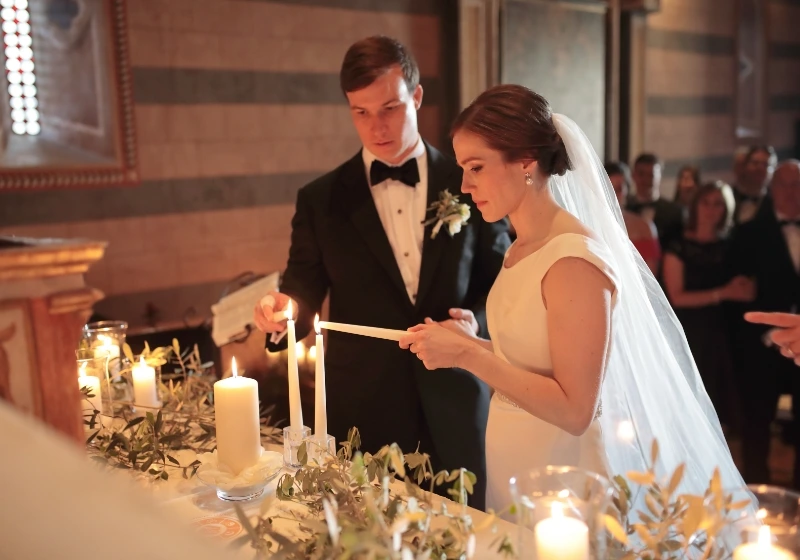
Two individual candles are lit by each partner, then used together to light a central candle, symbolizing two lives becoming one.
Origin
Popularized in American Christian weddings in the second half of the 20th century.
Suggested for
- Humanistic celebrations
- Spiritual ceremonies
- Interfaith & multicultural ceremonies
- Christian ceremonies
El Lasso
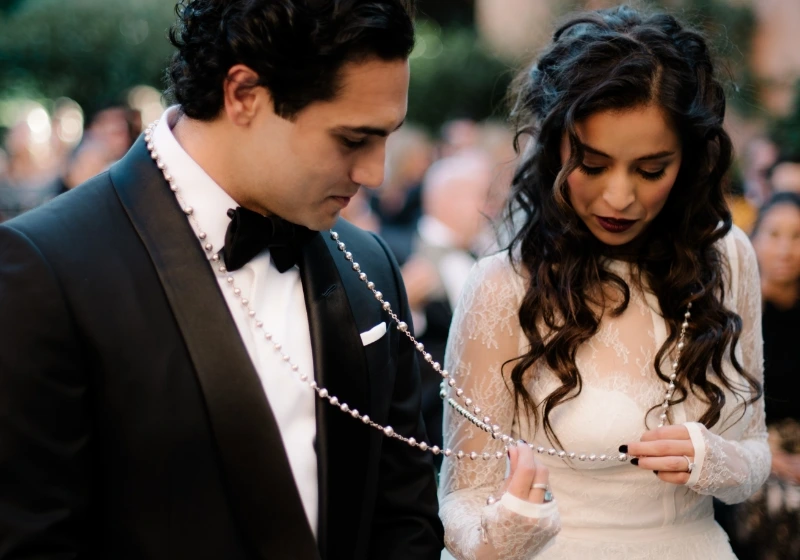
A lasso, often a large rosary or decorative loop, is placed around the couple’s shoulders in the shape of an infinity symbol, representing eternal unity.
Origin
Rooted in Catholic traditions and widely used in Latinx and Filipino cultures.
How it’s performed
The lasso can be placed by your celebrant in Tuscany or loved ones and can be made of a traditional rosary, flowers, or silk ribbons.
Suggested for
- Humanistic ceremonies (with ribbons or flowers)
- Spiritual & interfaith ceremonies
- Couples with Catholic heritage
- Christian ceremonies
Sand Ceremony
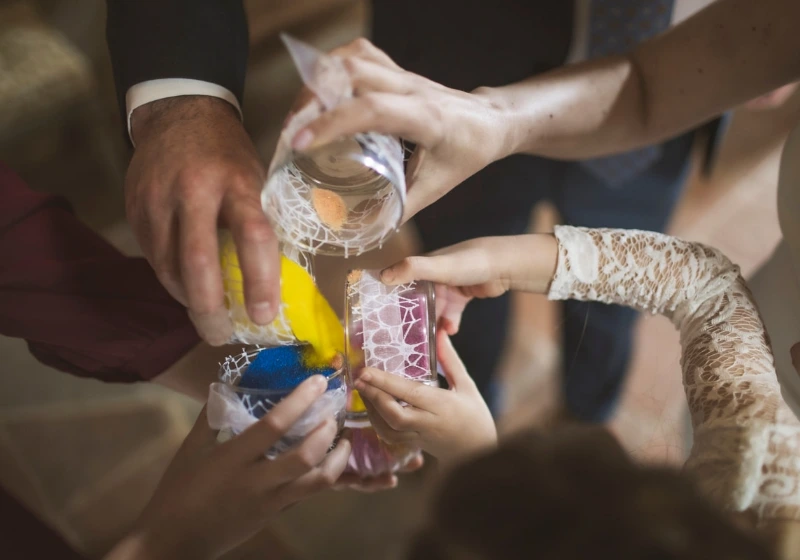
Each partner pours colored sand into a shared vessel, symbolizing the merging of lives, values, and dreams.
Origin
Developed in the late 1980s as an outdoor-friendly alternative to the unity candle.
Suggested for
- Humanist ceremonies
- Interfaith & multicultural ceremonies
- Couples with children
- Renewal of vows
Tree Ceremony
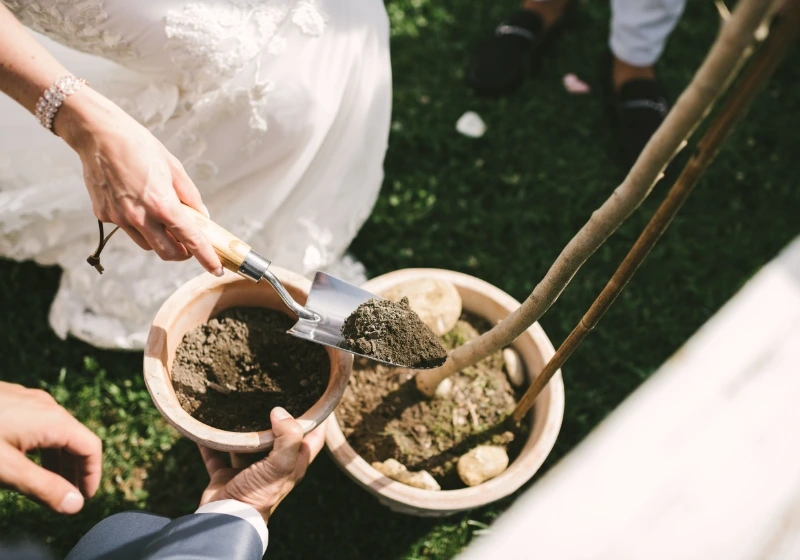
The couple plants a tree or meaningful plant together, symbolizing growth, strength, and a future nurtured with care.
Origin
An ancient ritual found in many cultures.
How it’s performed
Each partner adds soil (often from their home country) before planting the tree together.
Suggested for
- Multicultural weddings
- Humanist ceremonies
Wine Box Ceremony
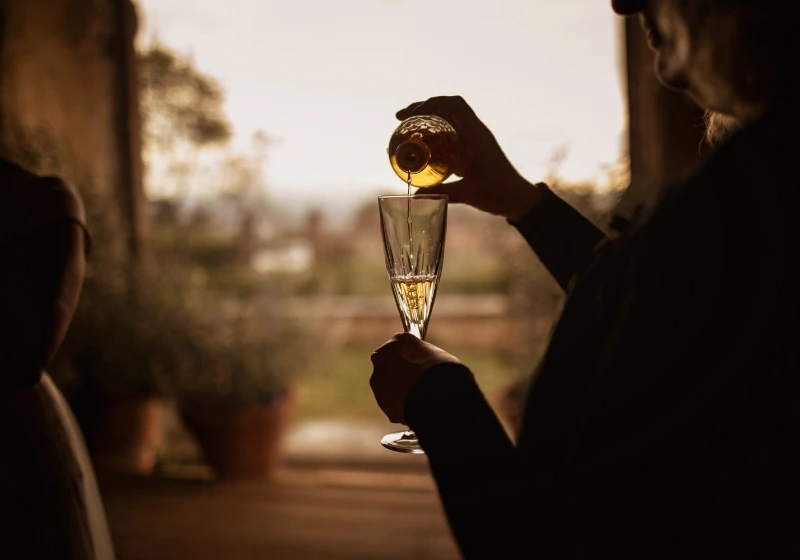
A bottle of wine (sometimes paired with written vows or letters) is sealed in a box to be opened on a future anniversary.
Origin
Unknown, non-religious.
Suggested for
- Humanist ceremonies
- Multicultural ceremonies
- Wine lovers
- Winery weddings
- Renewal of vows
Final Thoughts
A symbolic ceremony is, at its heart, about freedom.
There are no rigid traditions to follow and no fixed script you must respect. Instead, you have the opportunity to shape the ceremony around what truly matters to you: your story, your values, and the people gathered to witness the beginning of this new chapter.
Some couples choose something simple and intimate. Others prefer a ceremony rich with readings, rituals, and music. Both are equally meaningful.
The only real rule is that the ceremony should feel authentic to you.
Whether you are planning a symbolic wedding in Florence or Siena, or you prefer the landscape of the Chianti region, or the rolling hills of Val D’Orcia, even the simplest ceremony can become something truly unforgettable, surrounded by breathtaking landscapes and centuries of beauty.