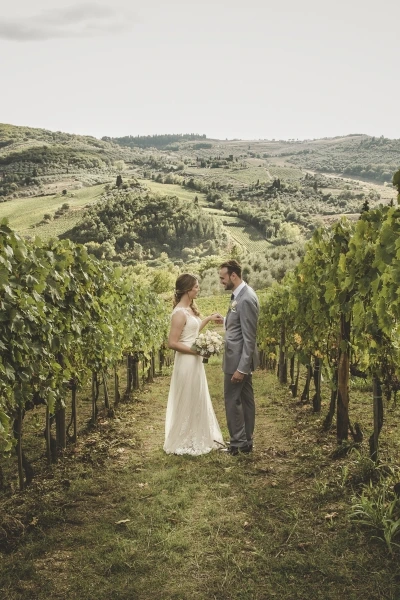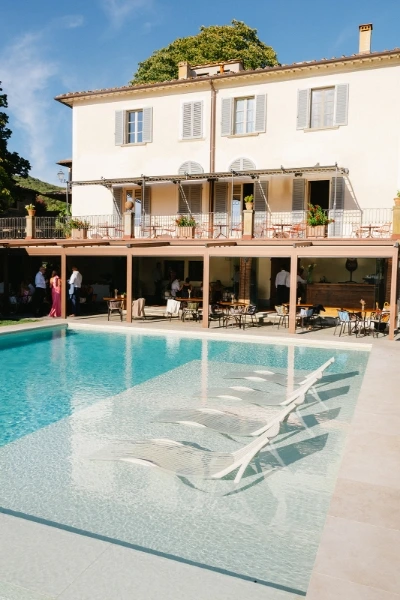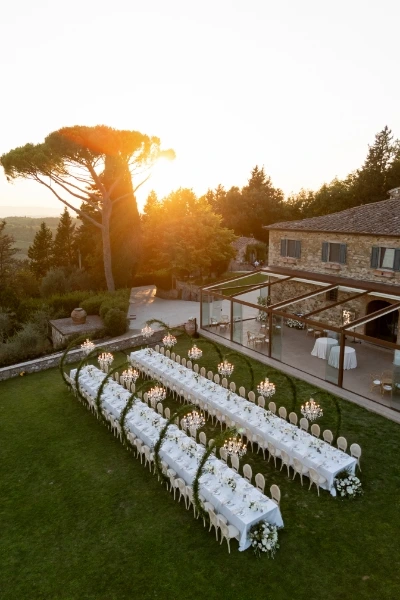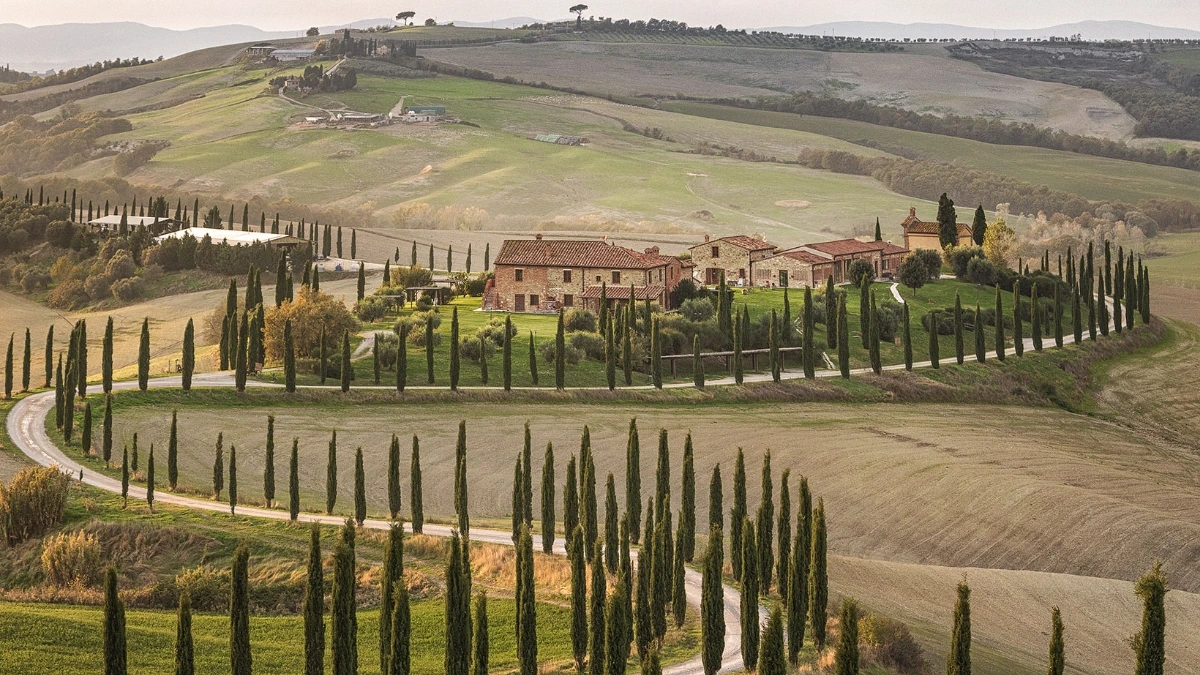
If Chianti is known for its vineyards and Florence for its Renaissance villas, Val d’Orcia is where Tuscany becomes cinematic.
This UNESCO-protected valley, stretching south of Siena toward Monte Amiata. This is the landscape most people imagine when they picture Tuscany for the first time: rolling golden hills, winding roads lined with cypress trees, isolated farmhouses perched on ridges, and sunsets that feel almost suspiciously designed by a very talented art director.
But beyond the postcard views, Val d’Orcia has a very distinct personality when it comes to weddings.
Compared to areas like Chianti or the countryside closer to Florence, venues here tend to be smaller and more intimate. Many are restored farmhouses or boutique countryside retreats rather than large estates, which means they often host fewer guests but offer an atmosphere that feels incredibly exclusive and personal.
In other words, Val d’Orcia is perfect for couples who want the landscape to become part of the celebration itself, not just the backdrop.
But here’s what often isn’t immediately clear.
Not all venues in this area work in the same way.
And while it’s easy to fall in love with the views, understanding how each place actually functions is what allows you to choose a setting that truly fits the kind of experience you want to create.
Here are five of the best wedding venues in Val d’Orcia, and what you should know about each of them before making your choice.
What Makes Val d’Orcia Different?
Val d’Orcia doesn’t follow the same rules as other wedding areas in Tuscany.
Unlike Chianti or the countryside closer to Florence, where larger estates and villas are more common, this region is defined by a different scale. Venues here are often smaller, more private, and more integrated into the landscape.
This has a direct impact on how weddings unfold.
Guest capacity tends to be lower, spaces are more contained, and the experience becomes naturally more immersive. Instead of moving through multiple large settings, everything happens within a more intimate and cohesive environment.
For couples drawn to a more intimate feeling, or planning smaller-scale weddings that have become increasingly popular, this is exactly what makes Val d’Orcia so compelling.
The landscape is not just a backdrop. It becomes part of the experience, shaping the rhythm of the celebration and the way guests move through the space.
At the same time, this also means that certain types of weddings require a more thoughtful approach.
Larger guest counts, multi-day events, or more structured timelines may need to be adapted, or carefully designed across multiple locations, to work seamlessly in this context.
Understanding how each venue actually works in practice is what allows you to make a more informed choice, not just based on aesthetics, but on how well a setting can support the kind of experience you want to create.
Borgo di Castelvecchio
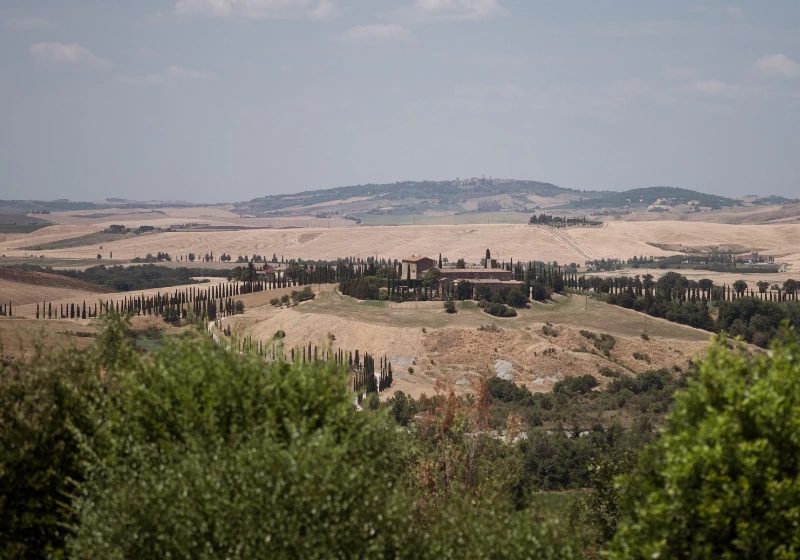
A hilltop hamlet overlooking the Val d’Orcia
Perched on a hill overlooking Val d’Orcia, Borgo di Castelvecchio feels like a small Tuscan village set apart from everything else: quiet, open, and naturally immersive.
The borgo can accommodate up to 78 guests on site, with an ideal wedding size between 75 and 90 people. This makes it one of the few venues in the area where a full group can stay together without splitting across multiple properties.
This has a direct impact on the experience.
When everyone stays in the same place, the wedding becomes more fluid. Moments don’t feel scheduled or fragmented, they unfold naturally, with guests moving through the weekend as part of the same shared environment.
Ceremonies usually take place on the lawn near the pool, facing the ivy-covered tower, while dinners are hosted in the central piazza or in the courtyard around the tree. The layout allows the celebration to move across different spaces while maintaining a strong sense of cohesion.
There are, however, a few aspects to consider.
Indoor spaces are suitable for up to around 70 guests. Beyond that, a tented solution becomes necessary, with an impact on both budget and setup. The backup option is present, but more limited and less integrated compared to the main outdoor areas, something to keep in mind when defining guest numbers.
A practical advantage is that guests can pay the venue directly for their stay, simplifying logistics and making it easier to manage contributions without adding pressure on the couple.
What makes it unique
Borgo di Castelvecchio is one of the few venues in Val d’Orcia where a larger group can stay together in a single location, while still maintaining a relaxed and accessible feel. It combines the atmosphere of an exclusive hamlet with a structure that supports a full wedding weekend, making it particularly suited for couples who want a shared, continuous experience without overcomplicating logistics.
Vitaleta
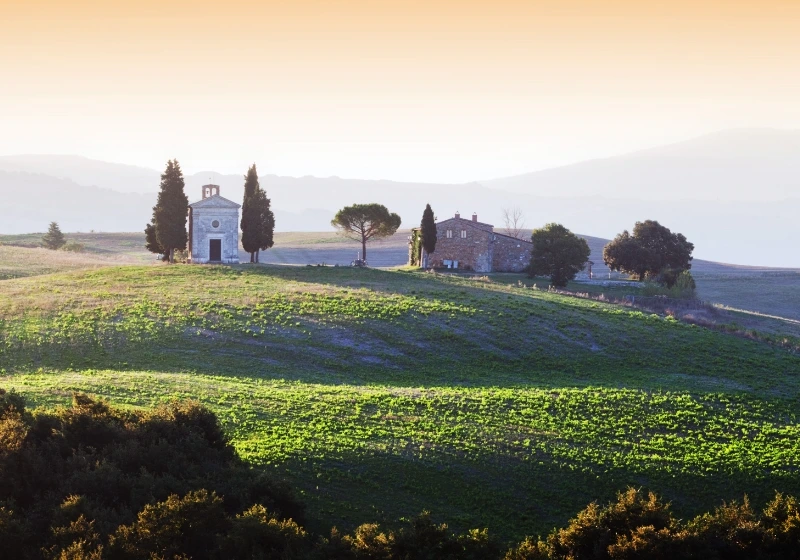
One of Tuscany’s most iconic ceremony backdrops
Few places in Tuscany are as instantly recognizable as the chapel of Vitaleta.
Set in the middle of open fields, surrounded by cypress trees and rolling hills, it’s one of the most photographed landscapes in the region, and for many couples, the image that defines their idea of a Tuscan wedding.
Part of its fame also comes from cinema: the chapel appears in The Gladiator, in the iconic scene where the protagonist walks through a field of wheat, with this exact landscape in the background.
Unlike traditional venues, however, Vitaleta is not a self-contained estate with accommodation.
It works as a day-rental location, where the full wedding can take place, but without the possibility for guests to stay on site. This means that transportation must be organized and accommodation is typically spread across nearby properties.
While the setting is private, its popularity also means that passing visitors are part of the landscape, something that is managed during events, but still worth considering.
From a spatial perspective, the venue is more versatile than it may appear. Outdoor areas can host up to 150 guests, while indoor spaces, including two large halls, provide a solid alternative in case of weather changes.
What makes it unique
Vitaleta is one of the few locations where the ceremony setting is strong enough to define the entire identity of the wedding.
At the same time, that same strength requires a more intentional approach.
With no on-site accommodation and all logistics built around a single, highly recognizable space, the experience depends on how well everything else is planned
Locanda in Tuscany
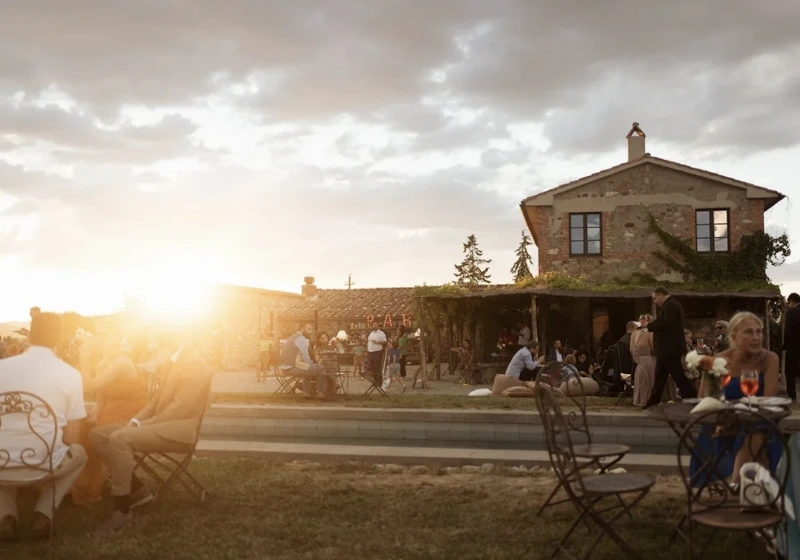
Where the landscape becomes the venue
Locanda in Tuscany offers a very different perspective on a wedding in Val d’Orcia.
Located in the heart of the valley, rather than on its ridgelines, it sits within the landscape itself while still opening onto wide views of the surrounding hills. The experience here is less about overlooking Val d’Orcia, and more about being fully part of it.
With accommodation for 18 guests and an ideal wedding size between 30 and 50 people, it is best suited for smaller, more intimate celebrations. This is not a venue designed for scale, but for proximity, where the group stays connected and the pace of the weekend slows down.
Ceremonies usually take place on the hillside, fully open to the surrounding landscape, while dinners unfold in the courtyard or near the fields. The spaces are spread out, yet visually connected, creating a continuous relationship with the environment rather than a sequence of separate moments.
There are, however, a few aspects to consider.
Indoor options are very limited, and a tented solution becomes necessary in case of unstable weather. Outdoor events are allowed until 1am, after which the celebration needs to move indoors.
What makes it unique
What defines Locanda in Tuscany is its essentiality.
The venue doesn’t rely on built-in scenography or multiple settings. Instead, it places you directly inside the landscape of Val d’Orcia, where very little needs to be added.
This makes it particularly suited for couples who are looking for a quieter, more authentic experience, where the atmosphere comes from the place itself, and from the time shared together, rather than from the structure of the event.
Dimora Buonriposo
A peaceful countryside retreat
Dimora Buonriposo offers a more intimate and residential take on a wedding in Val d’Orcia.
Rather than feeling like a venue, it feels like a private country home, one that opens onto expansive gardens and wide views across the landscape.
With accommodation for up to 16 guests, it is best suited for smaller groups staying on site, while outdoor spaces can host larger celebrations of up to 80–100 guests. This creates an interesting balance: a compact, homely base paired with generous outdoor areas.
Ceremonies usually take place in the gardens, in a dedicated spot facing a medieval tower that once marked the boundary of the area, adding a subtle historical layer to the setting. Dinners unfold with long tables set on the lawn, while the celebration can move naturally across different spaces surrounding the property.
From a planning perspective, scale needs to be considered carefully.
Indoor spaces are suitable for around 30–40 guests, so larger weddings typically require an external setup to support the dinner. At the same time, the size and quality of the gardens offer a high degree of flexibility in how the event can be structured.
What makes it unique
Dimora Buonriposo stands out for the way it combines the feeling of a private home with the scale needed to host a full wedding.
It allows you to create an experience that feels personal and familiar, without giving up the possibility of a more structured or visually curated event.
For couples looking for a setting that feels like “their own place” in Tuscany, but with the space to host a larger celebration, it offers a particularly well-balanced solution.
Terre di Nano
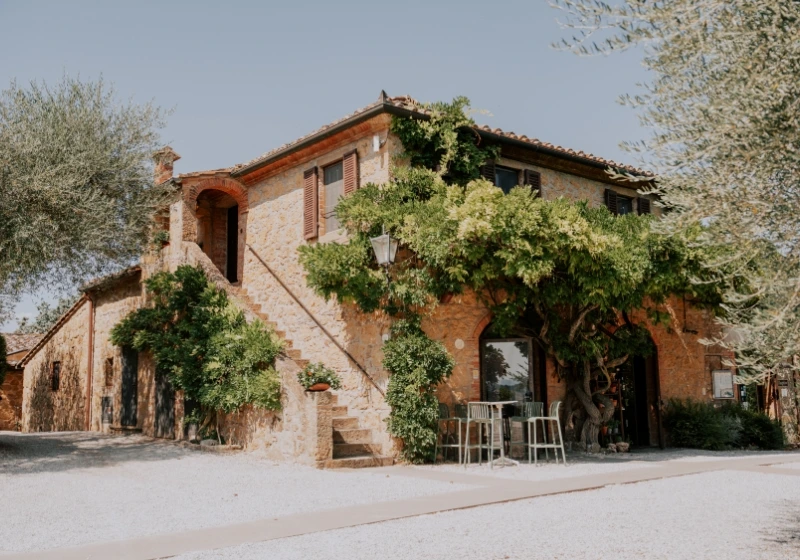
A farmhouse experience in the heart of Val d’Orcia
Terre di Nano offers one of the most grounded and authentic wedding experiences in Val d’Orcia.
Set within a working farmhouse that produces its own olive oil and focuses on local, seasonal cuisine, it’s a place where the connection to the territory is not curated, it’s simply part of everyday life.
With accommodation for around 34 guests (expanding to approximately 50), and the ability to host weddings of up to 110 people, it works well for both smaller groups staying on site and larger celebrations built around it.
The layout of the property plays a key role in how the day unfolds.
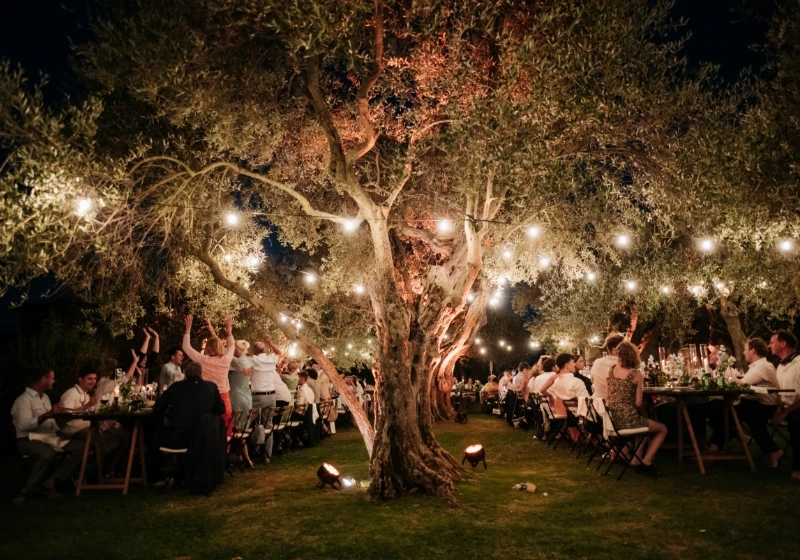
Ceremonies usually take place on a natural terrace overlooking the countryside, while dinner is set in the olive grove. It represents a distinctive space, open yet naturally protected, where long tables sit among the trees and surrounding buildings create a sense of shelter.
Each part of the event happens in a different area, allowing the experience to reveal itself gradually rather than all at once.
From a practical perspective, the venue offers strong flexibility. It includes a solid indoor alternative for larger groups and well-defined spaces that support a clear event flow. Outdoor music is typically allowed until midnight, after which the celebration moves inside.
What makes it unique
Terre di Nano stands out for the way it combines authenticity with naturally charming settings. After all this venue has been featured within our 10 favorite Tuscan wedding venues.
The experience doesn’t rely on extensive production or transformation. Instead, it builds on what is already there: the landscape, the food, and the atmosphere of a real Tuscan farmhouse.
For couples looking for a relaxed celebration that feels connected to the place itself, it offers a setting where very little needs to be added, yet everything feels complete.
Finding the Right Fit in Val d’Orcia
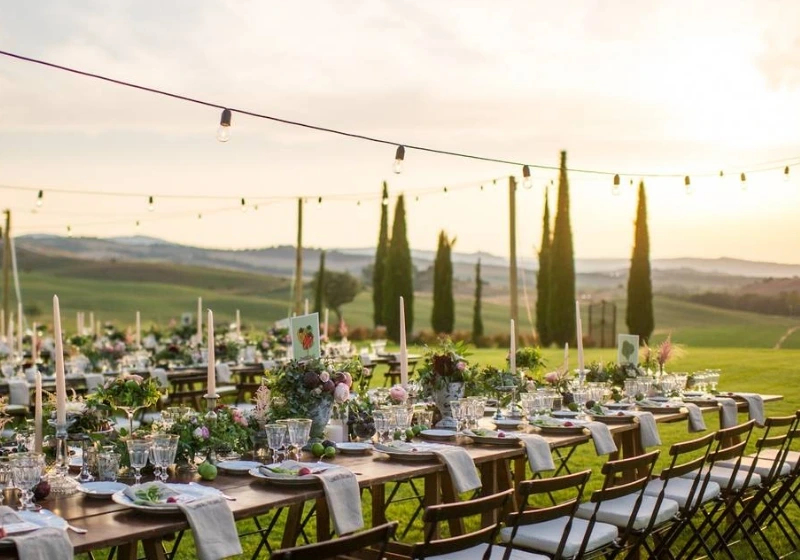
What these venues show is not just how different Val d’Orcia can feel, but how differently each setting needs to be approached.
From fully immersive hamlets to ceremony-driven locations, from essential retreats to working farmhouses, each option comes with its own structure, its own rhythm, and its own set of implications.
This is where things often become less clear.
On the surface, many venues can appear similar, or even comparable in terms of pricing. In reality, what sits behind that first impression can vary significantly.
A location that seems more affordable at first may require additional elements. These elements can be external setups, guest transfers, or extra locations, that change both the budget and the overall experience.
Understanding these differences is what allows you to move from a visual comparison to a more informed decision.
Not just choosing what looks right, but what actually works for the kind of wedding you have in mind.
If you’re navigating multiple options and finding it difficult to see what truly sets them apart, we can help you read between the lines, and guide you toward a choice that feels aligned from the start.