If you and many of your guests are flying to Italy from different parts of the world, calling the entire celebration sustainable would probably be an overstatement. Travel is part of the environmental impact of a destination wedding, and choosing recycled paper invitations isn’t going to make that disappear.
But sustainability doesn’t have to be an all-or-nothing label.
Once you’ve decided to celebrate your wedding in Tuscany, there are still many decisions that can reduce unnecessary waste, transportation and one-time production from the venue you choose and the number of guests you invite to the flowers, rentals, food and suppliers involved in the celebration.
And after planning destination weddings for international couples, we’ve learned that the most sustainable-looking choice isn’t always the one that makes the biggest difference. A villa surrounded by olive trees isn’t sustainable simply because it looks sustainable. And an eco-friendly option isn’t necessarily cheaper, easier or even available locally.
So rather than giving you another list of green wedding ideas, we want to look at what planning a more sustainable wedding in Tuscany actually means in practice: where your choices can make a meaningful difference, where compromises are involved, and where simply doing less can sometimes be the more responsible choice.
Start With the Decisions That Have the Biggest Impact
When couples think about making their wedding more sustainable, they often start with the details: recycled paper, seasonal flowers or plastic-free favors. These choices matter, but we think the conversation should start much earlier.
The number of guests you invite and the venue you choose can have a far greater impact than many of the smaller decisions you’ll make later. A destination wedding for 30 or 50 guests simply operates on a different scale from one for 200 from the amount of food and rentals required to the number of suppliers involved.
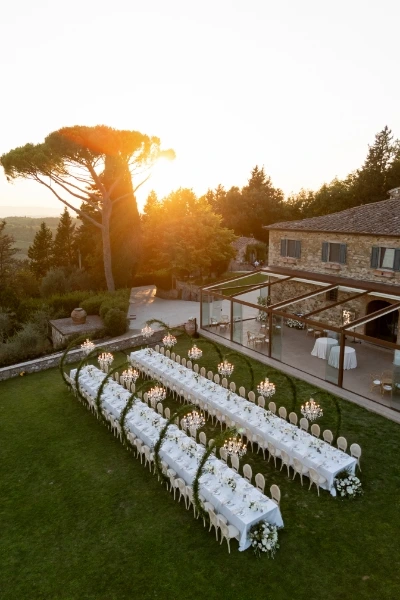
A property where most guests can stay and several events can take place onsite can reduce transportation throughout the weekend, while existing furniture and infrastructure may reduce how much needs to be brought in specifically for your wedding.
But don’t judge a venue’s sustainability by its setting. What matters is how the property actually operates.
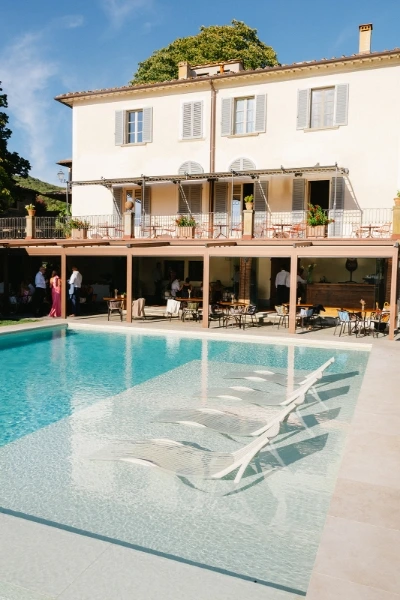
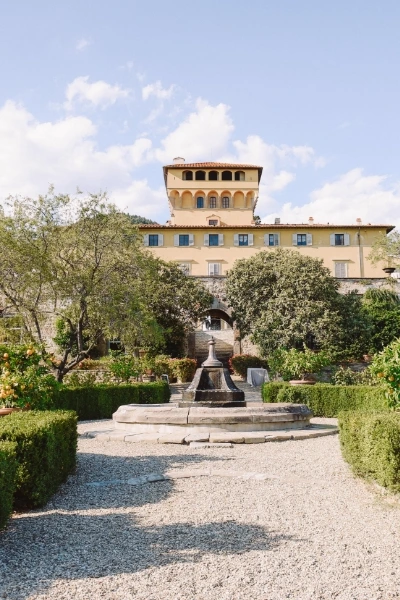
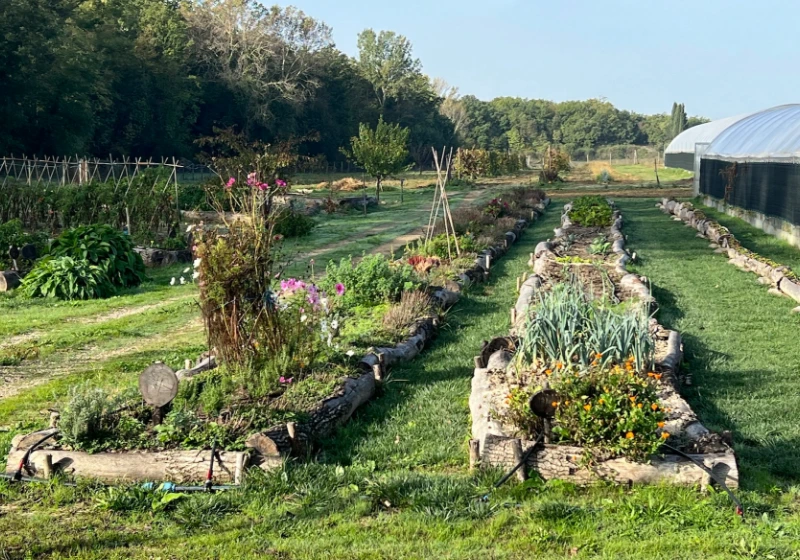
We’ve worked with Tuscan venues that approach this in different ways. Borgo Pignano produces food and wine on its estate, grows plants and flowers for its herbal laboratory and uses biodiesel. At Borgo I Vicelli, the restaurant uses its own olive oil and produce from its vegetable garden, while spirits for cocktails can come from a small Florentine distillery. Casa Cornacchi takes the farm-to-table approach further, producing wheat for its bread and pasta, olive oil and raising animals for some of its food production.
None of these practices alone makes a wedding sustainable. But they show why it’s worth looking beyond the landscape: what the venue produces, what it sources locally, what it already provides and how sustainability is incorporated into its everyday operations.
Make the Destination Part of the Wedding, Not Just the Backdrop
Sustainability isn’t only about reducing waste or environmental impact. A destination wedding also has a social and economic relationship with the place hosting it.
For us, that means working primarily with Italian vendors and, whenever possible, Tuscan ones. It reduces unnecessary travel, but it also keeps more of the value created by the wedding within the local economy supporting the caterers, producers, artisans and professionals who contribute to what couples come to Tuscany to experience in the first place.
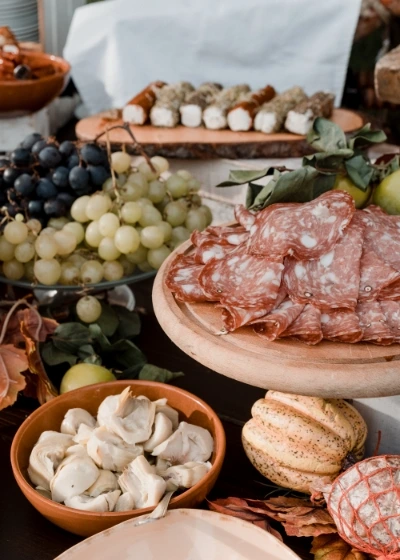
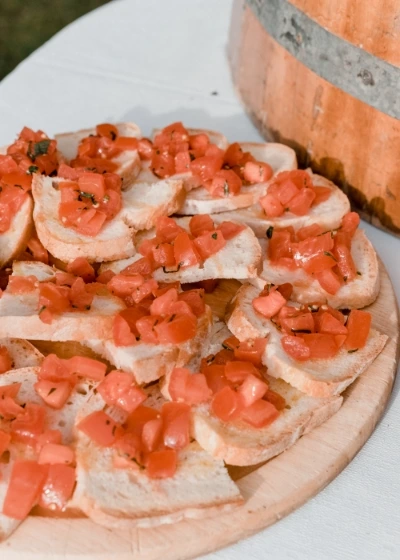
The same applies to food and drinks. Tuscany has exceptional caterers and producers, so we encourage couples to embrace seasonal ingredients, local wines and regional products rather than trying to recreate something they could have anywhere else.
 |  |
This is also where a multi-day wedding can become more meaningful. A welcome dinner, wedding day and post-wedding event give your guests time to slow down, experience the food, landscape and culture, and connect with the destination beyond the few hours of the wedding itself.
If you’re asking your guests to travel to Italy because you value what this country has to offer, we believe Italy should be more than the backdrop for your photographs. Choosing local isn’t only about reducing impact. It’s also about contributing to the people, businesses and culture that make the experience possible.
Your Flowers Can Be Beautiful Without Being Used for 20 Minutes
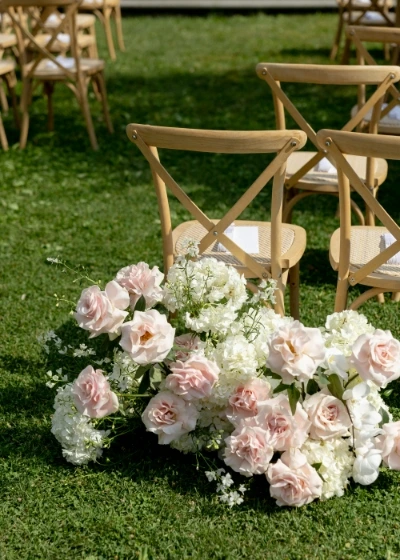 | 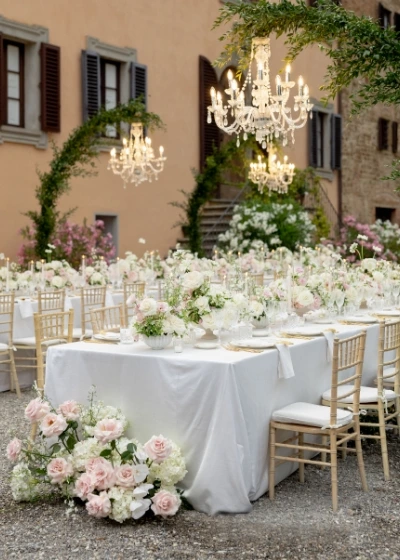 |
When we design wedding flowers, sustainability starts before choosing the flowers themselves. The first question is how long and how often an arrangement can actually be used.
A large floral arch may look beautiful, but depending on how it is built, it might remain in place after a 20-minute ceremony. Ground arrangements, flowers in vases and other movable designs can often travel from ceremony to dinner or cake cutting instead. We regularly plan this kind of reuse: it reduces waste, makes better use of the flowers and can also make the floral budget work harder.
What you choose matters too. Seasonal doesn’t necessarily mean local much of the professional flower supply in Italy comes from countries such as the Netherlands and Ecuador. But choosing flowers that are naturally in season can avoid some of the additional resources associated with forcing flowers outside their normal growing cycle, such as heated greenhouses and supplemental lighting.
Then there’s something couples rarely see: what is actually holding the arrangement together. Traditional floral foam is convenient, but it’s a single-use plastic. Depending on the design, florists can instead work with flowers directly in water, reusable metal mesh, plant-based supports or kenzans small reusable bases with pins that hold individual stems in place.
These alternatives aren’t suitable for every design, and some cost more. Which brings us to an important point: sustainability is easy to prioritize when the sustainable option is also the cheapest one. The real decisions begin when it isn’t.
Sometimes sustainability saves money, as with repurposing your ceremony flowers. Sometimes it requires spending more or adapting the design you originally imagined. Being more sustainable doesn’t always mean spending less.
Rent, Reuse and Ask What Already Exists
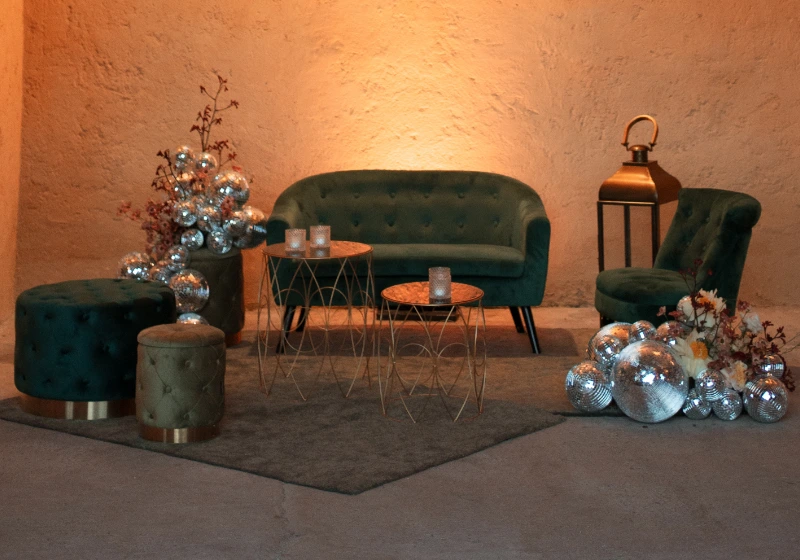
Most of what you see in a wedding setup isn’t purchased for a single event. Tables, chairs, linens, glassware, tableware, candle holders, vases and many decorative elements are usually rented and used again across many weddings.
That’s already preferable to buying items that may only be used once. But rental doesn’t mean impact-free. A large wedding setup can require considerable transportation, with trucks delivering furniture, tableware, lighting and décor and returning later to collect everything.
So our first step is always to understand what the venue already has and what can realistically become part of the setup. But with multi-day weddings, there is another opportunity that can make an even greater difference: reuse the larger items across different events.
Tables, chairs and lounge furniture don’t necessarily need to change because the welcome dinner, wedding day and pool party have different styles. We can keep some of the same furniture and create a different atmosphere through the elements around it. This reduces the amount of equipment that needs to be rented and transported without making the three events feel identical.
Luxury doesn’t have to mean excess. A beautifully designed wedding doesn’t require every table, chair or decorative element to be sourced specifically for that event. The design can feel completely personal while still making intelligent use of what already exists.
Sometimes the more thoughtful choice is simply to ask: do we really need another version of something we already have?
The Most Sustainable Detail May Be the One You Don’t Buy
 |  |
Not every wedding detail needs a more sustainable alternative. Sometimes, the better question is whether you need that detail at all.
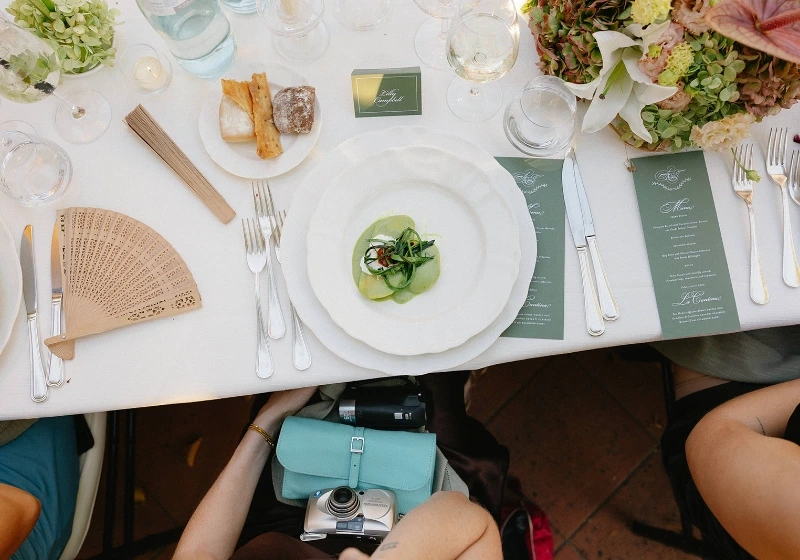
Some choices are easy. Invitations and RSVPs can be managed digitally, avoiding paper, printing and international shipping altogether. For the stationery you do need on the wedding day menus, place cards or a seating plan reusable supports such as mirrors, frames and easels can become part of the setup without being produced specifically for your wedding.
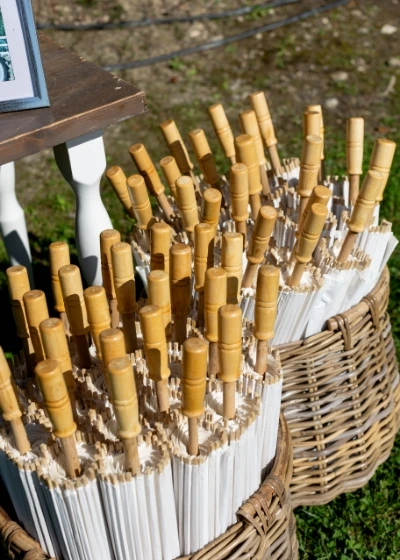
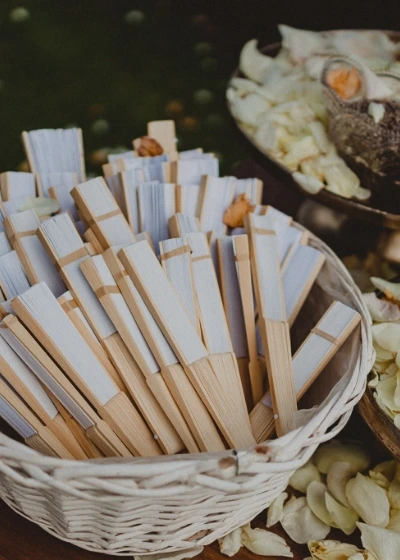
Then there are all the small items introduced throughout the day. Plastic heel protectors, fans, parasols, flip-flops, glow sticks, foam sticks, novelty glasses and other party accessories can collectively create a surprising amount of waste. Many are mass-produced far from the destination, used for only a few hours and discarded immediately afterwards. Illuminated gadgets add another issue: they often contain small batteries that are difficult, and sometimes impossible, to separate from the object before disposal.
We’ve finished weddings with two or three bins filled with items that guests used once and left behind.
The answer isn’t necessarily to eliminate everything. If guests genuinely need fans or parasols for a summer ceremony, for example, we can choose durable versions and encourage guests to return them after use. The same set can then serve several weddings throughout the season instead of becoming another one-day purchase. Couples spend less, and we create less waste.
Welcome bags can follow the same logic: food, drinks and useful products that guests will actually consume rather than objects added simply to fill the bag.
Before looking for an eco-friendly version of every wedding item, ask whether you need it at all, and, if you do, whether it can be chosen well enough to be used again.
A Multi-Day Wedding Doesn’t Need Three Completely New Productions.
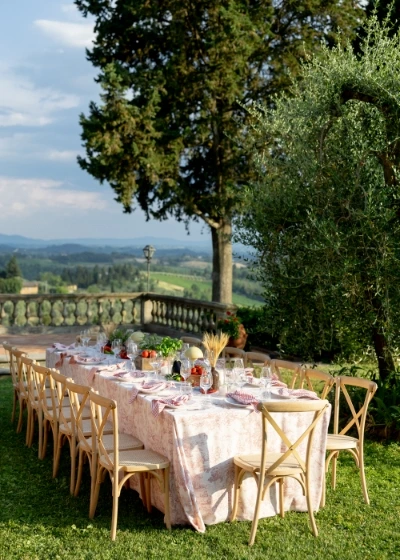 | 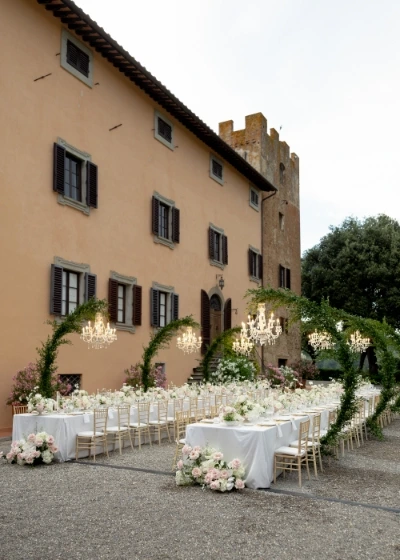 |
One of the things we love about multi-day weddings is that each event can have its own personality. Your welcome dinner shouldn’t necessarily look like your wedding day, and your pool party doesn’t need to feel like either of them.
But different doesn’t have to mean starting from zero every time.
The same principle can extend beyond individual rentals to the way the entire wedding weekend is produced, something we consider throughout our bespoke wedding planning in Tuscany. Whenever possible, we look for elements that can work across different events and change what surrounds them, rather than creating three entirely separate setups.
We’ve also started building simple décor packages for welcome dinners and pool parties that can be used across multiple weddings. In some cases, we’ve even coordinated purchases between two or three couples so that items such as pool-party sets could be shared rather than bought several times for a few hours of use.
This is where we think the idea of a slower, more intentional wedding weekend becomes interesting. Having three days together doesn’t have to mean three times the décor, three times the production or three times the amount of stuff. The distinction between events can come from the food, music, setting and way your guests experience each moment.
And sustainability, like every other wedding priority, sometimes requires compromise. Locally produced products may cost more. Choosing a venue because of its environmental practices may mean giving up another property you preferred aesthetically. A more responsible solution may require adapting an idea rather than reproducing exactly what you saved on Pinterest.
A more sustainable destination wedding isn’t about pretending the celebration has no impact. It’s about recognizing where unnecessary impact happens and making better choices where you realistically can. A memorable wedding doesn’t need more of everything.