One of the most common reactions couples have while planning a wedding in Tuscany is:
“Nobody told us this.”
In reality, most hidden wedding costs in Tuscany are not hidden at all. They simply emerge as the wedding becomes more defined and logistical requirements start taking shape.
This happens because many of the costs couples naturally expect at the beginning, venue rental, catering, flowers, photography, or entertainmentare visible from the start. Other expenses only become apparent later, when guest transportation, weather backup plans, permits, setup requirements, power supply, or venue-specific logistics start entering the conversation.
Nobody is intentionally hiding these costs. In most cases, they simply emerge between different parts of the wedding planning process. Each supplier naturally focuses on their own area of responsibility, while very few people are looking at the budget as a whole.
The challenge is not that these expenses exist. The challenge is discovering them after most of the budget has already been allocated elsewhere.
Understanding which costs tend to be overlooked from the beginning helps couples build more realistic expectations, define priorities more clearly, and avoid unpleasant surprises later in the planning process.
Why Some Wedding Costs Are Easy To Miss
When couples first start planning a wedding in Tuscany, they naturally focus on the elements that are most visible to them.
The venue, the food, the flowers, the photographer, the music, and the overall atmosphere are often the first decisions that shape both the vision and the budget.
What tends to receive far less attention are the technical, logistical, and operational requirements that allow the event itself to function smoothly behind the scenes.
Things such as weather backup plans, transportation logistics, permits, power supply requirements, installation teams, or venue-specific restrictions are rarely top of mind during the early stages of planning. In many cases, couples simply have no reason to think about them yet.
This is also why these costs often feel unexpected later on. Not because anyone is intentionally hiding them, but because they are not immediately visible from the beginning.
Unlike a venue, a florist, or a photographer, these are not services couples actively choose to purchase. They are usually operational requirements that emerge as the wedding becomes more defined and specific decisions begin to reveal their practical implications.
The more detailed the planning becomes, the more these behind-the-scenes elements begin to surface.
And while many of them may seem relatively minor individually, together they can have a meaningful impact on the overall wedding budget if they are not considered early enough in the planning process.
Hidden Costs Most Couples Don’t Expect
Many hidden wedding costs are not linked to luxury upgrades, but rather to operational requirements, regulations, and technical elements that only become relevant once planning begins in earnest.
One of the most common examples in Italy is the music license issued by SIAE. Because this requirement does not exist in many countries, international couples are often surprised to discover that recorded music, live music, and entertainment typically require a separate permit and fee.
Another detail worth paying attention to is VAT. Some supplier proposals in Italy are quoted before taxes, which means the final amount may be higher than couples initially expect if they focus only on the headline figure.
Overtime is another commonly underestimated expense. While most supplier proposals clearly specify service hours and overtime rates, couples do not always realize that extending the celebration by just one hour may affect multiple vendors simultaneously, including entertainment, bar service, staffing, transportation, and venue operations.
Lighting and sound are also frequently underestimated. Many couples naturally assume that a venue already provides most of the infrastructure required for an event. In reality, creating the desired atmosphere often requires dedicated equipment, technical setup, and professional production that go far beyond simply hiring a DJ or a band.
Transportation deserves a special mention as well. Most couples know they will need it, but often assume it will be relatively straightforward. In Tuscany, however, guest transportation can quickly become more complex than expected depending on the location, accessibility, and logistics of the venue itself.
Individually, none of these costs are necessarily dramatic. Together, however, they can have a meaningful impact on the overall budget if they are not considered from the beginning.
Why Transportation Is Often Underestimated
Transportation is one of the clearest examples of a wedding cost that often appears much simpler than it actually is.
Most couples naturally imagine a straightforward scenario: a vehicle collecting guests in one location and taking them directly to the venue. In reality, destination weddings in Tuscany rarely work that way.
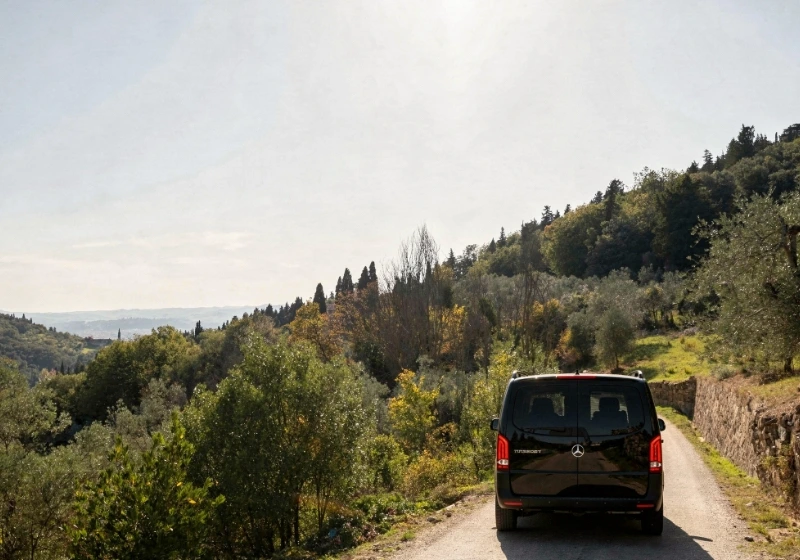
Guests are often staying in different accommodations, scattered across the countryside or historic towns. Some properties may only be accessible by smaller vehicles, while others require multiple pickup points and carefully coordinated schedules in order to move everyone efficiently.
Accessibility is often one of the biggest factors. Narrow country roads, historic village centers, limited vehicle access, and local permits can all influence the type of transportation required and, consequently, the final cost.
To give a practical example, transportation for around 40 guests may initially appear to cost around €1,500. Once multiple pickup points, smaller vehicles, access restrictions, and additional coordination are taken into account, the final investment can easily rise to €3,000–€4,000.
Historic city centers can create additional costs as well. In Florence, for example, permits required for larger vehicles can sometimes add several hundred euros to the transportation budget before the transfer itself is even considered.
We have even seen situations where couples obtained online transportation quotes that initially appeared significantly cheaper than expected, only to discover later that the proposed vehicle would not actually be able to reach the venue. Once the logistical reality became clear, the entire transportation plan needed to be redesigned.
This is why transportation costs are often underestimated. Couples naturally imagine the most obvious solution, while the actual logistics often require something very different once all the details are taken into account.
Costs That Only Emerge Once The Wedding Takes Shape
Some wedding costs only emerge once the celebration becomes more clearly defined because they are related to the specific project being created rather than to any standard wedding scenario.
One of the most common examples is the weather backup plan.
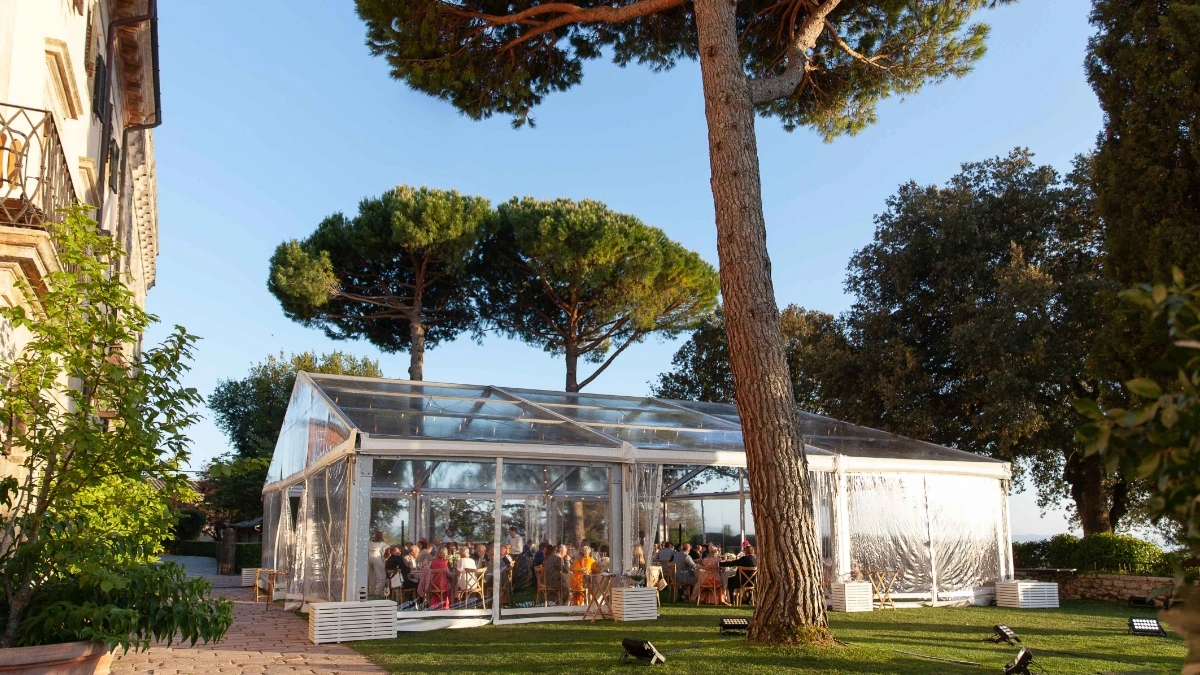
Many venues in Tuscany offer little or no indoor space capable of accommodating an entire wedding. In these situations, tensile structures become an essential part of the event rather than an optional precaution. While couples are usually aware that a backup plan will be needed, they do not always realize how significant the investment can be. Depending on the venue, guest count, installation requirements, and logistics, weather backup structures can easily represent one of the largest unexpected costs within the overall budget.
Power supply is another example. Most couples never think about generators during the early planning stages, yet they can become necessary once catering equipment, lighting, entertainment, and technical production requirements are evaluated together. In these cases, the generator is not supporting a single supplier but the event as a whole.
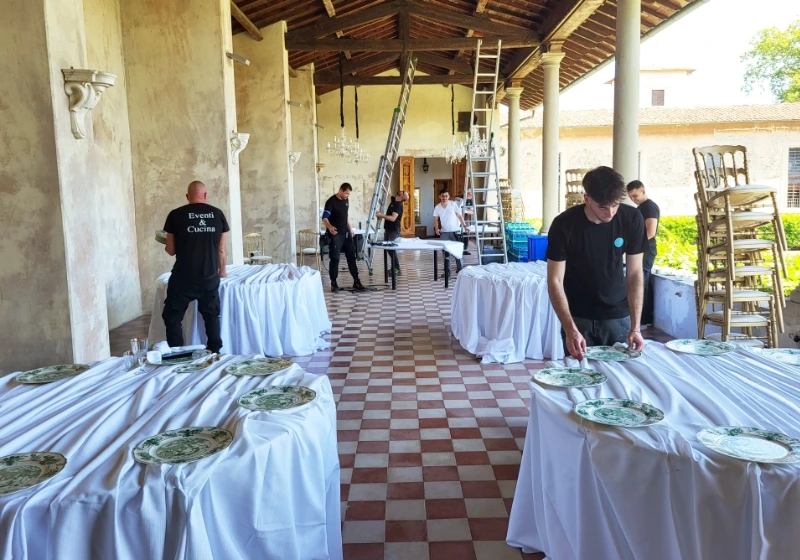
Furniture and tableware can create similar surprises. Couples often assume that ceremony seating, lounge furniture, cocktail tables, or decorative pieces are already available at the venue. In reality, many properties provide little or none of this infrastructure, requiring additional rentals to create the desired guest experience.
The same can happen with tableware. Venues offering in-house catering or restaurant services do not always provide the style, quantity, or setup couples have in mind, making external rentals necessary even when food service is already included.
These costs are rarely hidden. They simply emerge once the venue, guest count, design vision, and logistical requirements start coming together into a complete wedding project.
Hidden Costs Are Rarely The Problem. Discovering Them Too Late Is.
In most cases, hidden costs are not what ultimately create problems within a wedding budget.
The real challenge is discovering them after those funds have already been mentally or financially allocated elsewhere.
When an unexpected expense emerges, couples rarely change the overall vision of the wedding. More often, they start making adjustments. A few extra hours of entertainment may disappear. The live musicians planned for cocktail hour may become a curated playlist. A gelato cart, a photobooth, additional lighting, floral upgrades, or a guest experience activity may suddenly feel less essential than they did a few weeks earlier.
Sometimes the budget increases slightly. More often, however, couples simply redistribute resources and redefine priorities along the way.
The frustration usually comes not from the amount itself, but from the feeling that the cost could have been anticipated earlier. A €3,000 expense discovered at the beginning of the planning process feels very different from the same expense appearing after most of the budget has already been allocated.
This is why realistic budget planning is so important from the start. Not because every wedding contains hidden costs, and not because budgets inevitably grow, but because understanding the implications of a venue, a guest count, or a specific wedding vision allows couples to make more intentional decisions from the beginning.
The value of identifying hidden costs early is not necessarily spending less, but allocating resources more intentionally, reducing unnecessary frustration, and protecting the elements of the celebration that matter most.
Planning A Wedding Budget Means Understanding The Whole Picture
The goal is not to eliminate every unexpected cost, but to understand which ones are likely to emerge before they start influencing important decisions.
Many of these expenses are not hidden, nor are they unique to Tuscany. They are simply part of the practical and operational reality behind any well-executed wedding.
This is also one of the reasons why realistic budget planning goes far beyond collecting supplier quotations. It requires understanding how venues function, how logistical requirements impact the event, and how individual decisions connect to the wedding project as a whole.
Planning a wedding budget is not simply about calculating costs. It is about understanding how the different pieces of the project fit together so that decisions can be made intentionally rather than reactively.
If you would like a broader understanding of wedding budgets in Tuscany, you may also find our guide on destination wedding costs in Tuscany helpful. And if you are evaluating whether professional planning support is right for your celebration, you can explore our wedding planning services to better understand how the process works.