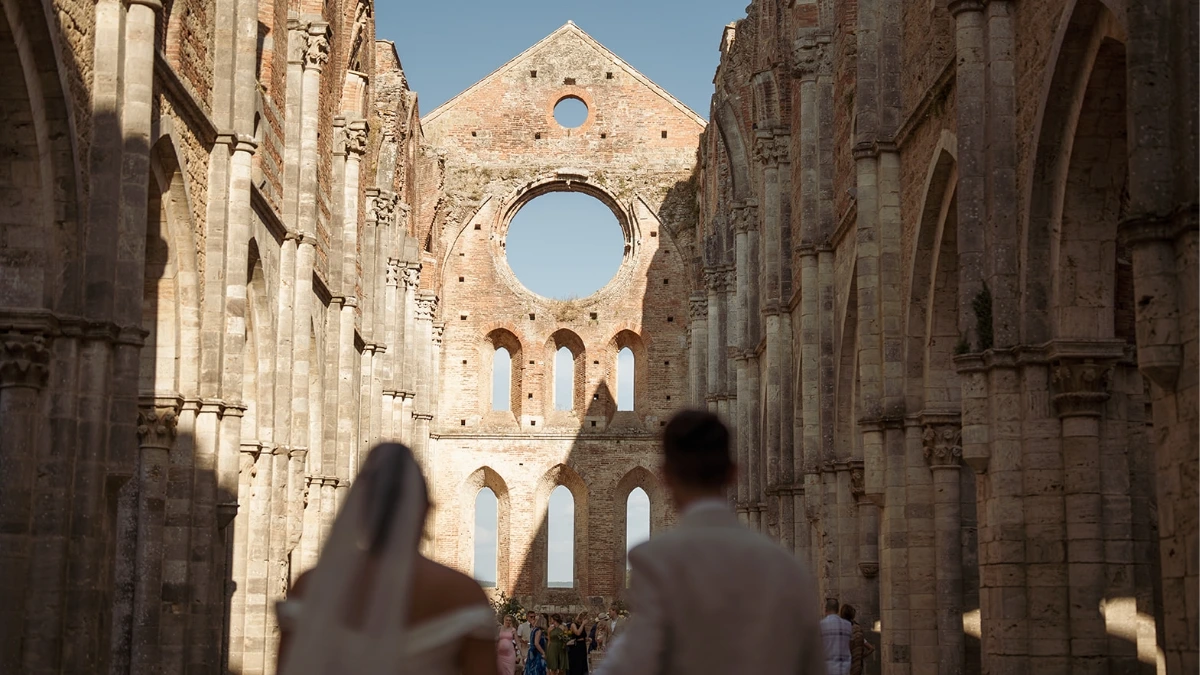
Getting married in Italy as an American citizen is a dream for many couples, a chance to celebrate love surrounded by history, art, and the Italian lifestyle. Before planning your big day, however, it’s important to understand the different types of wedding ceremonies available in Italy and what each one entails.
As a U.S. citizen, you can generally choose between three main types of wedding ceremonies in Italy:
- Symbolic wedding ceremony → The most flexible and completely personalized option, can be officiated by a friend or family member and may include any personal touches you wish.
- Religious wedding ceremony → This follows the traditions of your faith and must comply with its specific requirements. For more info check this article
- Civil wedding ceremony → The legally binding option, recognized both in Italy and in your home country. To have a civil wedding in Italy, American citizens must meet certain legal requirements and complete the necessary documentation within a specific timeframe prior to the ceremony.
At Floé Weddings, we specialize in assisting international couples, particularly American citizens, throughout the entire process of planning a legally recognized wedding in Italy.
In this article, we’ll walk you through everything you need to know about the civil wedding in Italy: where it can take place, the documents required, the step-by-step legal process, and helpful tips to make your dream Italian wedding smooth and stress-free.

Where you can get Legally Married in Italy as an American Citizen
Civil weddings in Italy can be celebrated at all Italian town halls or in specific venues that have a special permit. Unfortunately the authorised venues are not as many, and are very high on demand so it can be hard to find availability unless you are flexible with dates.
The legally binding marriage can be officiated by a mayor or registrar in Italian and translated in English if needed.
In case you would like to combine the civil marriage with a religious ceremony (so the wedding is both religious and legally binding) the ceremony can take place in Church if the wedding is Catholic for example, or at any location that is accepted by your faith. That said the documents and process for the civil wedding don’t change, indeed the religious part is just additional to the legal one.
How to Get Legally Married in Italy as an American Citizen
Getting married in Italy as a foreigner is one of the most romantic dreams a couple can imagine, but beyond the beauty of rolling Tuscan hills and Renaissance villas, there’s also a set of legal requirements to navigate. The process isn’t difficult, but it does require time, precision, and the right local assistance.
Since all your documentation must be translated and legalized, it’s essential to rely on a professional who understands the Italian system and can guide you through each step, from paperwork to the actual civil marriage or religious ceremony.
For example at Floé we collaborate with a trusted paralegal professional which specialize in facilitating civil weddings specifically for American Citizens in Italy.
Here is a first, synthetic overview of the documents required to get legally married in Italy as an American citizen:
- Valid American passport
- Birth certificate (original or certified copy)
- Divorce certificate (if applicable)
- Nulla Osta – Affidavit of No Impediment
- Atto Notorio
The legal part follows a clear sequence. Below is what you need to know before going to Italy to ensure your wedding day unfolds smoothly.
How to obtain the documents to Get Legally Married in Italy as an American Citizen
Now that you know the types of documents that you need, we will guide you through understanding the process of how to actually obtain these documents. Because planning a destination celebration also means preparing for cultural and practical details. We’ll cover the essential Things To Know Before Going to Italy ,from timing and documentation to local traditions so you can arrive confident, organized, and ready to say “I do” in true Italian style.
Step 1: Documents you need to get started
To start the process make sure to have the following documents fully valid and original for both spouses:
- Valid American passport
- Birth certificate showing your parents’ names. (original or certified copy)
- Divorce decree or death certificate if either partner has been previously married (for women, a period of minimum 300 days must have passed from divorce to the new wedding date).
Step 2: The Atto Notorio — Sworn Declaration of No Impediment
The first step you actually take in the legal process is to obtain the Atto Notorio, a sworn declaration confirming that nothing prevents you from getting married.
You can obtain it either at the Italian Consulate in the United States (preferable) – here you can find the list of Italian Consulates in the U.S. or at an Italian court (Tribunale) once you arrive in Italy.
After making an appointment you must go to the Italian Consulate (or Tribunale) with two witnesses who are required to swear under oath that there are no legal impediments to your union. You will need to bring with you the documents outlined in step 1.
Important!
Your Atto Notorio is valid for three months. So make sure to not obtain it too early to avoid it expires. For example, if you are going to get married in Italy during the month of June, your atto notorio must be issued in the month of March, and not earlier.
Also, your full names have to be written in the same way on your passports, atto notorio, and on the nulla osta. Otherwise, your paperwork will not be valid.
*Brides, you will have to write out your maiden name!
Consular network here
Step 3: Obtaining the Nulla Osta
The Nulla Osta is a document you can obtain in Italy from one of the U.S. Embassies or Consulates (in Rome, Florence, Milan, or Naples).
Before getting on your flight to Italy, remember to bring with you all the documents outlined in step 1. plus the Atto Notorio obtained as in point 2.
Also make sure to book an appointment at the U.S. Embassy or Consulate in time keeping in mind that they only open a few days a week (here the link to U.S. Embassies and Consulates in Italy).
You’ll complete a brief affidavit confirming your eligibility to marry and pay a small fee.
The Nulla Osta is valid for 6 months.
Schedule a notarial service here
Important!
Make sure your full names are written in the same way on your passports, atto notorio, and on the nulla osta. For women, it is mandatory to write out the maiden name.
Step 4: Translate and legalize the Nulla Osta
Your Nulla Osta must be translated in Italian and legalized by the local Prefettura. This implies to book an appointment and physically bring the original Nulla Osta Document to complete the process.
Normally this is a step that our paralegal collaborator handles for you.
After this step the information will be passed to the town hall (Comune) where your wedding will take place.
Step 5: Declaring Your Intent to Marry
Before the wedding day, you’ll make a formal declaration of intent (Dichiarazione di Matrimonio) at the town hall where your civil marriage will be celebrated. This appointment typically happens two days before the ceremony. You’ll present all documents obtained along with your passports and, if you don’t speak Italian, an interpreter will assist.
This step officially registers your intention to marry and allows the local registrar to prepare your marriage license.
For many couples, this is the first real moment of excitement, standing in an Italian municipal office surrounded by centuries of history and realizing it’s really happening.
Step 6: The Civil Ceremony — A Legally Binding Celebration
Your civil ceremony can take place directly at the town hall, or in certain licensed villas and gardens across Tuscany. These ceremonies are legally binding, recognized internationally, and conducted in Italian though an interpreter can translate each passage. You’ll need two witnesses, and their identification must also be presented.
The ceremony itself is elegant in its simplicity, often set in historic halls or outdoor courtyards overlooking the countryside with the possibility of exchanging personalized vows, turning the legal act into a deeply emotional moment.
Step 7: After the Wedding — Registering Your Marriage in the U.S.
After your ceremony, you’ll receive an official Italian marriage certificate (Certificato di Matrimonio). To make your union recognized in the United States, the certificate must be apostilled at the Prefettura, translated into English, and then submitted to your local county clerk’s office back home.
This final step completes your international paperwork, ensuring your marriage is recognized both in Italy and the U.S., a perfect harmony between two countries, just like your love story.

What Does a Civil Wedding in Italy Cost?
When planning a civil wedding in Italy as a U.S. citizen, it’s important to consider not only the beauty of the venue but also the practical aspects including fees and administrative costs.
The venue rental fee in Italy for the civil ceremony alone varies depending on location, season, and setting. For example, town halls and licensed venues typically range from € 600 for smaller municipalities to € 7,000 for exclusive historic villas or panoramic spots in Tuscany.
On top of the venue cost, expect to pay around € 500 for administrative fees, taxes, and duties, which cover the town hall’s processing and the issuance of official certificates.
Professional assistance with the paperwork, including translations, legalizations, and coordination with local authorities, is usually not included in these costs above and can vary depending on your specific needs and the complexity of your documentation.
Partnering with an experienced planner or legal consultant in Italy ensures everything is handled properly and efficiently, sparing you the stress of navigating Italian bureaucracy on your own and making mistakes that would prevent you from the possibility of actually getting married on your planned wedding date.
Final Thoughts
Planning a civil wedding abroad comes with its fair share of paperwork, but in Italy, even the legal process has a certain romance to it.
And while the legal steps might seem complex, they’re entirely manageable with the right guidance (and maybe a little prosecco along the way).
At Floé Weddings, we’ve guided countless international couples through this process ensuring everything runs smoothly so you can focus on what really matters: celebrating your love in one of the most beautiful countries in the world.